Lost for 75 Years: The WWII Mystery of USS Grayback and Its 80 Sailors
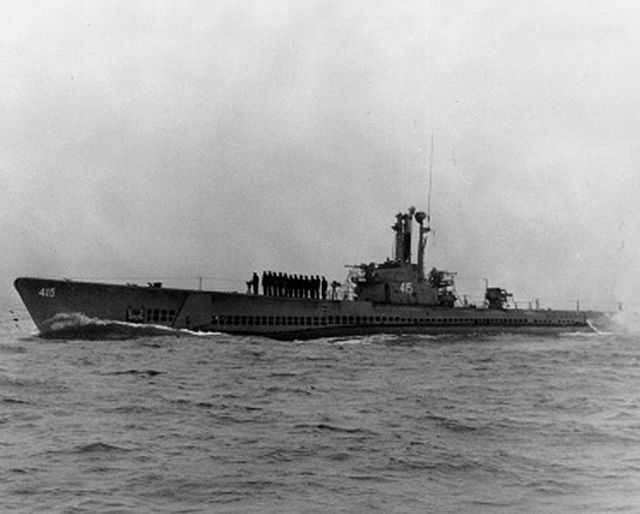
During World War II, the oceans became vast battlefields where countless ships and submarines disappeared without warning. Some were destroyed in moments, leaving little evidence behind, while others vanished so completely that families were left with only silence, unanswered questions, and fading hope. One such tragedy was the sinking of the U.S. Navy submarine USS Grayback, a vessel that went down during the war with 80 sailors aboard. For decades, the submarine remained hidden beneath the sea, its final resting place unknown—until it was discovered 75 years later, bringing long-awaited closure to a story that had remained unfinished for generations.
The USS Grayback was one of the many submarines deployed by the United States during WWII, playing a critical role in naval warfare across the Pacific. Submarines were considered both powerful and dangerous weapons: they could strike suddenly and disappear into the depths, but they were also vulnerable to enemy aircraft, warships, and mines. Life aboard these vessels was demanding and often terrifying. Sailors operated in cramped spaces, surrounded by machinery, limited air, and constant pressure—both physical and psychological. Yet despite these challenges, submarine crews became some of the most courageous and skilled forces in the war.
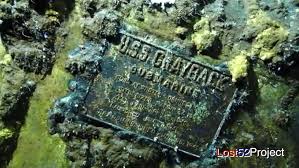
Commissioned as part of America’s effort to strengthen its naval presence, the Grayback was sent into the Pacific to disrupt Japanese shipping and support Allied operations. Like many submarines of its time, it served as a stealth weapon, targeting enemy vessels and creating chaos in supply routes. The Pacific theater was vast, and submarines had the advantage of striking where the enemy least expected. But that advantage came at a cost: missions were long, exhausting, and unpredictable, and even a small mistake or sudden attack could mean disaster.
Throughout its service, the USS Grayback earned recognition for its effectiveness. It successfully attacked enemy ships and contributed to the broader strategy of weakening Japan’s ability to transport supplies, fuel, and equipment. Submarines were especially valuable because they could operate independently for weeks, striking targets and then disappearing. But each patrol carried the same haunting risk—the possibility that the submarine would never return.
In early 1944, the USS Grayback was nearing the end of one of its war patrols when tragedy struck. The submarine was operating in enemy-controlled waters, where Japanese forces were constantly on the lookout for American submarines. Anti-submarine warfare had become increasingly advanced by that stage of the war, and the Japanese military relied heavily on aircraft and escort ships to detect and destroy threats beneath the waves. One accurate bomb, one well-placed depth charge, or one sudden ambush could end a submarine’s mission forever.
The Grayback disappeared during this period, and after it failed to return, it was declared lost. For the families of the crew, the news was devastating. During WWII, communication was limited and often delayed, and many families waited anxiously for updates. When a submarine went missing, there was rarely immediate confirmation of what happened. There were no distress signals, no survivors, and often no wreckage. The ocean swallowed the truth, leaving only a painful absence.
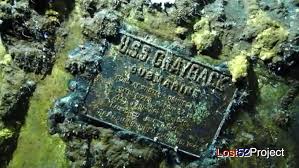
The loss of 80 sailors aboard the USS Grayback was not just a military tragedy—it was a human one. Each sailor had a life, a family, and a future that ended suddenly beneath the sea. Some were young men who had barely begun adulthood, while others were experienced sailors who had served on multiple missions. They were sons, brothers, husbands, and friends. Their loved ones were left with grief and uncertainty, never knowing exactly where the submarine went down or what its final moments were like.
For decades, the USS Grayback remained undiscovered. Its location became one of the many unsolved mysteries of WWII. While some war wrecks were found over time, others remained lost due to the vastness of the ocean and the limited technology available in earlier decades. Searching for a missing submarine is like searching for a needle in a haystack—except the haystack is an endless deep-sea landscape of darkness, pressure, and shifting currents.
The passage of time did not erase the importance of the Grayback. Historians, naval researchers, and families continued to remember its crew. Memorials honored the missing, and the Navy kept records of those who never returned. But the ocean still held the submarine’s exact resting place, keeping the final chapter of the story locked away.
That changed 75 years later, when advances in deep-sea exploration technology made it possible to search for wrecks with far greater accuracy. Modern sonar, underwater drones, and improved mapping tools have transformed the way researchers explore the ocean floor. These technologies allow search teams to scan wide areas and detect shapes and structures that would have been impossible to locate decades earlier.
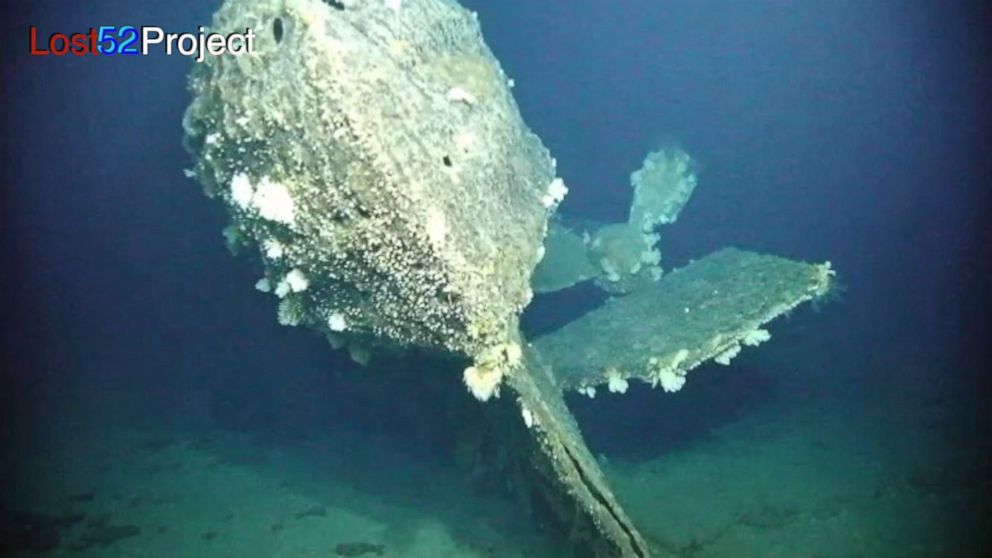
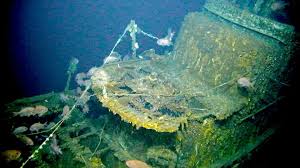
When the USS Grayback was finally found, it marked a powerful moment in naval history. The discovery was not only significant for military records but also deeply emotional for those connected to the crew. After so many years, the submarine was no longer just a name in a report—it became a real, physical place once again. The wreck served as a reminder of the dangers submariners faced and the sacrifices made during the war.
Finding a lost submarine is never just about technology or exploration. It is about restoring memory. It is about giving the fallen a known resting place. For the families of the 80 sailors aboard the Grayback, the discovery brought a form of closure that had been missing for generations. Even though time had passed and many relatives were no longer alive to see it, the knowledge of where the submarine lay helped complete the story.
The USS Grayback now rests as a silent underwater memorial. Like many WWII wrecks, it is considered a war grave, a place of respect rather than disturbance. The ocean has preserved it in darkness, and while it may never return to the surface, it continues to hold meaning. It represents courage, duty, and the heavy cost of war.
The story of the USS Grayback reminds us that history is not always fully known in its own time. Sometimes, answers come decades later, through persistence and progress. The submarine’s discovery after 75 years proves that even in the deepest waters, the past can still be found. And when it is, it brings with it remembrance—of the mission, the sacrifice, and the 80 sailors who never came home.