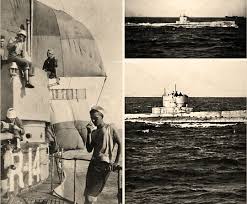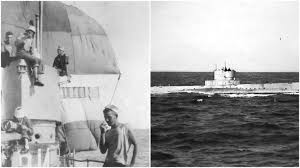
In May 1921, the vast Pacific Ocean became the setting for one of the U.S. Navy’s most tense and unforgettable emergencies. During a search mission off the coast of Hawaii, the U.S. Navy submarine USS R-14 (SS-91) found itself in a situation every sailor feared: it ran out of usable fuel and lost radio communication while still far from safety. The submarine was stranded roughly 100 nautical miles, or about 115 miles, from land—too far to drift comfortably and too isolated to rely on quick rescue.
At the time, submarines were still relatively new weapons in naval strategy. While they had proven their importance during World War I, they were far from the reliable machines modern readers might imagine today. Early submarines were limited in range, depended heavily on fuel efficiency, and carried equipment that could fail easily in harsh ocean conditions. The sea itself was unpredictable, and a small mechanical failure could turn into a life-threatening crisis within hours.
The USS R-14 was part of the Navy’s R-class submarines, vessels designed for coastal defense and short-range operations. These submarines were not built for long-distance endurance, and their crews knew that careful planning was essential for every mission. Yet even with preparation, the ocean had a way of testing limits. On this mission, something went wrong—fuel supplies became unusable, leaving the submarine without the power needed to travel safely. Even worse, the submarine’s radio communication was lost, cutting off the crew from the outside world.
Without fuel, the submarine’s options were limited. A vessel in the open ocean relies on power not only for movement but also for essential operations such as maintaining control, managing onboard systems, and ensuring stability. A submarine stranded at sea is especially vulnerable because it cannot simply float like a normal ship and wait comfortably. It must manage air, supplies, and the constant threat of changing weather.
The loss of radio contact made the situation far more dangerous. In the early 1920s, communication technology was nowhere near as advanced as it is today. If a ship or submarine went silent, there was no satellite tracking, no GPS signal, and no automatic emergency beacon to reveal its position. The USS R-14 had effectively disappeared into the Pacific, and unless someone physically located it, rescue could take too long—or might never come at all.
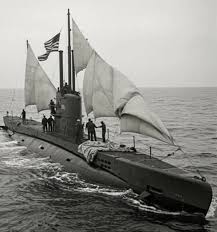
For the crew onboard, the psychological pressure would have been intense. Imagine being surrounded by nothing but ocean in every direction, knowing that land was over a hundred miles away, and realizing you could not call for help. The submarine’s interior would have been cramped, humid, and filled with the constant smell of machinery and seawater. Food and water were limited, and every hour that passed increased the risk of dehydration, exhaustion, and failure of onboard systems.
Still, Navy crews were trained for discipline under pressure. The men aboard USS R-14 were not helpless passengers—they were skilled sailors and submariners who understood the importance of teamwork and survival thinking. When normal procedures fail, the difference between life and death often comes down to creativity and leadership. In emergencies at sea, a crew must work with what they have, even if the solution seems unusual or improvised.
The Pacific winds and currents could either help or doom them. If the submarine drifted in the wrong direction, it could end up farther from Hawaii rather than closer. Even a small miscalculation could add days to their time at sea. Meanwhile, the sun could beat down on the metal hull during the day, turning parts of the submarine into an oven. At night, temperatures could drop sharply, leaving the crew cold and fatigued. Exposure, stress, and uncertainty would have tested everyone onboard.
Because the submarine could not rely on fuel, the crew had to consider alternate ways to move. They needed to maximize whatever limited resources remained and take advantage of natural forces. In that era, survival often meant combining engineering knowledge with old-fashioned seamanship. Even in the age of steel and engines, wind power still mattered. Sailors had depended on wind for centuries, and the ocean still rewarded those who understood it.
The USS R-14’s situation became a race against time. The longer it remained stranded, the greater the chance that essential systems would break down. Even basic needs—like clean air and safe internal conditions—could become a problem if the submarine stayed stuck too long. Submarines were not designed to remain motionless for extended periods, especially far from support.
Meanwhile, back on land or aboard other Navy vessels, the lack of communication would eventually raise alarms. A missing submarine could trigger search efforts, but locating it across hundreds of miles of ocean was like searching for a needle in a moving, endless haystack. The ocean does not hold still, and neither does a drifting vessel. Even if rescuers searched the correct area, spotting a submarine’s small silhouette on the water was extremely difficult.
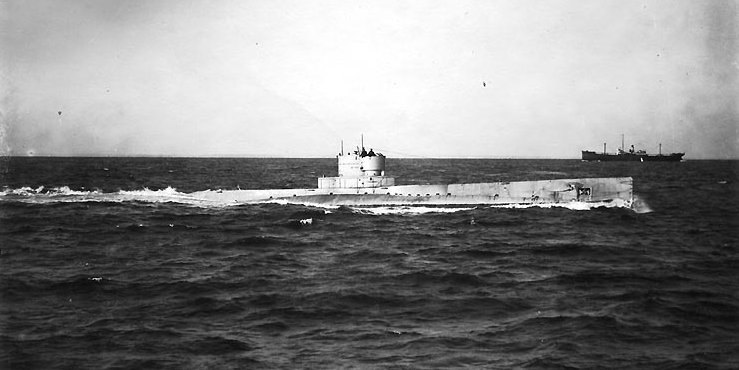
What makes the USS R-14 story so compelling is not just the danger—it is what it represents. It reflects the reality of early naval operations, where technology was powerful but imperfect, and where human decision-making mattered as much as machinery. It also shows the bravery of submariners, who operated in some of the most hazardous conditions imaginable, often without the safety nets that modern forces rely on today.
The incident off Hawaii became a lesson in preparation and adaptability. It reminded the Navy that submarines required reliable fuel management, stronger communication systems, and better emergency procedures. It also proved that even in near-hopeless conditions, crews could survive through calm thinking and teamwork.
Although the USS R-14 was far from shore and cut off from contact, its crew’s determination turned a potential tragedy into a remarkable survival story. Stranded roughly 100 nautical miles from Hawaii, the submarine and its sailors faced the Pacific with limited resources and no way to call for help. Yet their struggle became a powerful example of endurance and problem-solving at sea.
In the end, the USS R-14 incident remains one of those historical moments that shows how quickly routine missions can become emergencies—and how courage and intelligence can keep hope alive, even when the ocean seems endless.