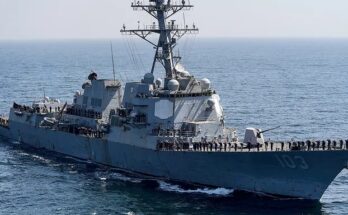
The story of the USNS Kilauea is one that reflects the full lifecycle of a naval vessel—from essential support ship to its final role as a target in a live-fire exercise. Once a critical component of the United States Navy’s logistics fleet, the ship met its end not in battle, but during a carefully planned naval gunnery exercise known as a SINKEX (sinking exercise).
USNS Kilauea was a Kilauea-class ammunition ship operated by the United States Navy’s Military Sealift Command. Commissioned in 1969 during the height of the Cold War, the vessel was designed to transport and transfer ammunition, missiles, and explosives to warships at sea. Its mission was straightforward but vital: keep the fleet supplied and combat-ready. Without ships like Kilauea, aircraft carriers, cruisers, and destroyers would be unable to sustain prolonged operations.
Named after the famous volcano in Hawaii, the ship symbolized power and force—fitting for a vessel responsible for carrying some of the Navy’s most destructive ordnance. Throughout its service life, USNS Kilauea operated across multiple oceans, supporting U.S. naval operations during periods of tension and conflict. Ammunition ships rarely attract public attention, but they are indispensable to naval strategy. They serve as floating warehouses, enabling combat vessels to remain deployed without returning to port for resupply.
Unlike front-line warships equipped with heavy weapons systems, ammunition ships focus on logistics and support. However, their role can be just as dangerous. Carrying thousands of tons of explosive material demands strict safety protocols and precision handling. Over decades of service, Kilauea successfully completed countless replenishment-at-sea operations, transferring ammunition while both ships moved in open waters—a complex and delicate maneuver.
After more than 40 years of service, USNS Kilauea was decommissioned in 2008. Advances in naval logistics and newer supply vessels eventually replaced older ammunition ships like Kilauea. Once retired, the vessel no longer had a combat or support role. However, instead of being scrapped immediately, the Navy designated it for one final mission: participation in a SINKEX.
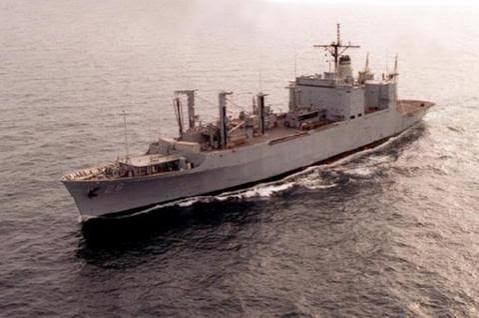
A SINKEX, or sinking exercise, is a live-fire training operation in which decommissioned ships are used as targets. These exercises allow naval forces to test weapons systems under realistic conditions. Missiles, naval gunfire, and sometimes torpedoes are fired at the target ship to evaluate performance, accuracy, and impact effectiveness. Beyond weapons testing, SINKEX events provide invaluable training for crews, offering real-world experience that cannot be fully replicated in simulations.
Before a vessel can be used in a SINKEX, it undergoes extensive environmental preparation. Hazardous materials, fuels, and pollutants must be removed to minimize environmental impact. The Navy follows strict regulations to ensure that sinking the ship at sea does not create long-term ecological damage. Once cleared, the ship is towed to a designated location in deep international waters.
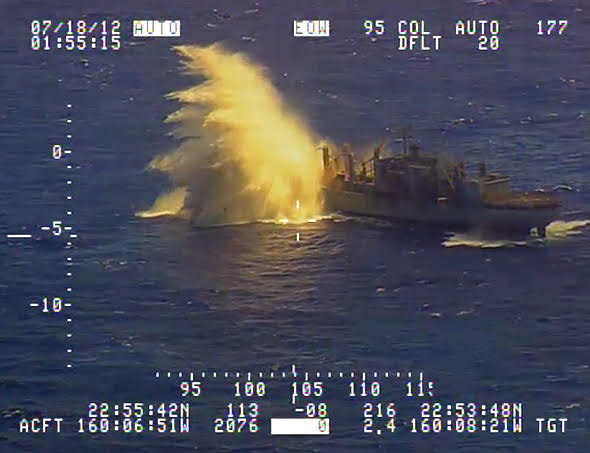
When USNS Kilauea’s final day arrived, it was positioned far offshore. Naval forces assembled to conduct the exercise. Precision-guided munitions and naval gunfire struck the aging hull. Each impact demonstrated the destructive power of modern weaponry. Observers noted how the ship absorbed the punishment—steel plating torn open, compartments flooding one by one.
Unlike dramatic movie portrayals where ships explode instantly in massive fireballs, real sinkings are often slower and methodical. After sustaining critical structural damage, water gradually filled the vessel. The once-proud ammunition ship began to list. Smoke dissipated. The sea crept higher along the hull. Eventually, buoyancy was lost, and the ship slipped beneath the waves.
The sinking of USNS Kilauea marked the end of a vessel that had served for decades. For many sailors and crew members who once worked aboard her, the event likely carried emotional weight. Naval ships often feel like living entities to those who serve on them—steel and machinery bound together by shared experience and mission.
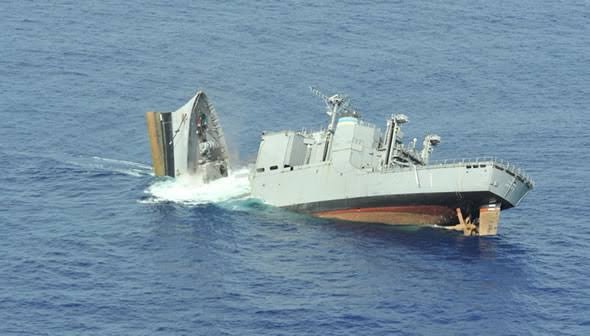
Yet in its final act, Kilauea continued serving the fleet. By functioning as a live-fire target, the ship contributed to improving combat readiness and ensuring that modern weapons systems perform as intended. Lessons learned from SINKEX exercises directly enhance naval effectiveness and safety. Every data point gathered helps engineers refine missile guidance, damage assessment models, and tactical planning.
The ocean floor now holds the remains of USNS Kilauea. Over time, marine life will transform the wreck into an artificial reef. Steel bulkheads will become habitats for fish and coral. In this way, the ship’s story continues in a different form—no longer supporting warships, but supporting marine ecosystems.
The lifecycle of naval vessels is often overlooked by the public. Ships are built with purpose, serve faithfully, and eventually retire. Some become museum ships; others are scrapped for metal. A few, like USNS Kilauea, end their journey in dramatic training exercises. While the image of a ship being deliberately sunk may appear destructive, it represents preparation—ensuring that sailors and weapons systems are ready for real-world threats.
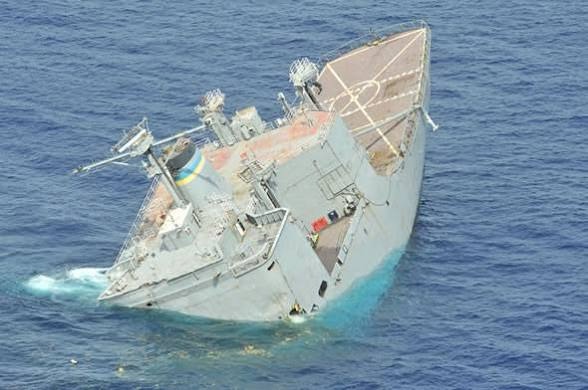
USNS Kilauea’s story is not one of combat glory or headline-making battles. Instead, it is a story of steady service, logistical backbone, and ultimate sacrifice in the name of training and readiness. From delivering ammunition across oceans to becoming a target that strengthened naval capability, the vessel fulfilled its duty from commissioning to sinking.