The ocean was calm before the storm.
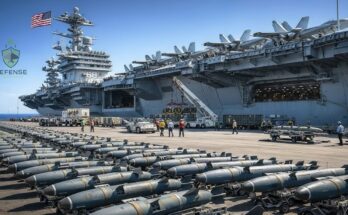
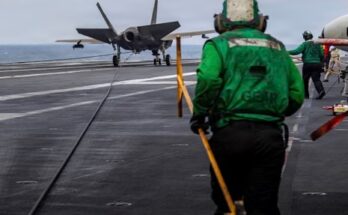
In the early hours before dawn, a United States aircraft carrier strike group cruised through contested waters. The carrier—one of the largest warships ever constructed—carried nearly 100 advanced fighter jets on its expansive flight deck and within its hangars. Supported by guided-missile destroyers, cruisers, and submarines, it represented one of the most formidable concentrations of naval power on Earth.
Above the sea, surveillance aircraft traced invisible lines across radar screens. Beneath the waves, sonar operators listened to the hum of engines and the whisper of currents. Everything appeared routine.
But hundreds of miles away, a decision had already been made.
From a remote airfield, a Russian Yak-141 vertical takeoff fighter prototype—revived and modernized in this fictional scenario—lifted into the night sky. Originally developed during the late Cold War as a supersonic VTOL (Vertical Take-Off and Landing) aircraft, the Yak-141 had once been an ambitious attempt to rival Western carrier-based fighters. In this imagined timeline, the aircraft had been upgraded with stealth coatings, advanced avionics, and long-range anti-ship missiles capable of striking targets far beyond visual range.
The pilot climbed rapidly, leveling off above a dense blanket of clouds. Electronic warfare support aircraft jammed enemy radar frequencies, creating pockets of uncertainty in the carrier group’s defensive shield.
At sea, radar operators detected something—but only briefly. A faint return. A glitch. Then nothing.
Moments later, the first missile launched.
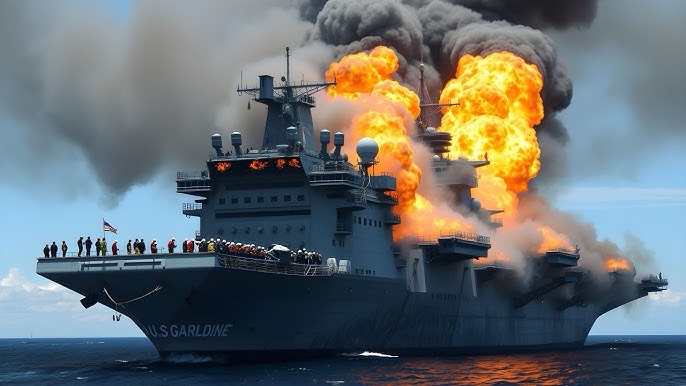
Traveling at high supersonic speed just above the ocean’s surface, it used sea-skimming tactics to evade detection. By the time defensive systems locked on, it was already seconds away. The carrier’s escort ships fired interceptor missiles. Phalanx close-in weapon systems roared to life, spewing streams of tungsten rounds.
One incoming missile was destroyed.
The second was not.
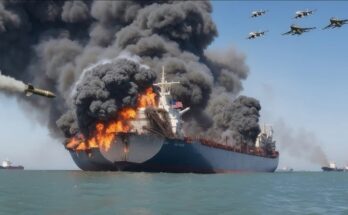
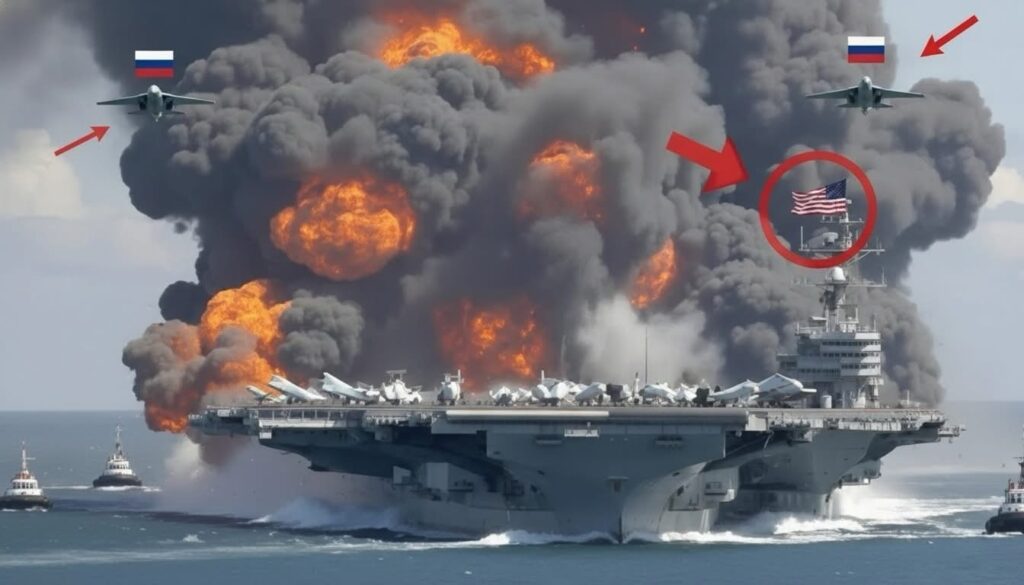
It struck the carrier’s forward deck in a thunderous explosion. Flames erupted skyward as aircraft parked on the deck were engulfed in fire. Shockwaves rippled through the superstructure, shattering equipment and igniting secondary fuel fires.
Onboard alarms wailed.
Damage control teams sprinted toward the inferno, clad in fire-resistant suits, dragging hoses into choking smoke. The carrier’s crew—thousands strong—moved with disciplined urgency. Aircraft were pushed overboard to prevent further explosions. Fire suppression foam coated the deck in white layers.
Then came the second wave.
The Yak-141, guided by satellite intelligence and real-time targeting updates, released additional long-range munitions before banking sharply away. Its vertical thrust vectoring nozzles allowed it to maneuver unpredictably, evading intercept attempts.
Below, the carrier’s escorts scrambled fighter jets to intercept—but the attacking aircraft had already retreated beyond engagement range.
A third missile slammed into the vessel near the waterline.
This impact was catastrophic.
Flooding began in multiple compartments. Internal bulkheads sealed automatically, but the damage had compromised critical systems. Electrical power flickered. Smoke filled passageways deep inside the hull. Despite the carrier’s immense size and layered defenses, the concentrated strike had achieved what once seemed unthinkable.
For thirteen relentless minutes, the fate of the floating airbase hung in the balance.
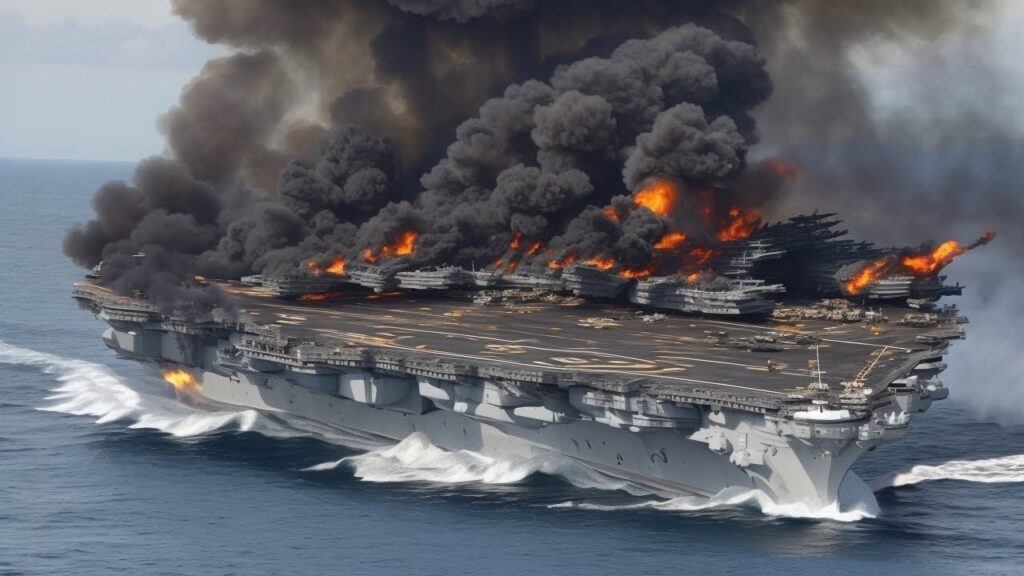
Fire crews contained some blazes. Medical teams treated the injured in makeshift triage zones. Helicopters evacuated the most critical casualties to escort ships. But the flooding spread faster than pumps could counter.
The captain made the hardest decision of his career.
“Prepare to abandon ship.”
Lifeboats deployed. Sailors moved in organized lines despite the chaos. Escort vessels maneuvered dangerously close to rescue survivors from the water. Thick black smoke rose into the morning sky, visible for miles.
Finally, with a slow and terrible inevitability, the aircraft carrier listed heavily to port.
Steel groaned. Water surged across the flight deck. The once-mighty warship—symbol of projection and power—began its descent into the sea.
As it slipped beneath the surface, a vast column of steam and smoke marked the spot where it vanished.
Silence followed.
Strategic Shockwaves
In this fictional scenario, the consequences were immediate and global.
The destruction of a U.S. aircraft carrier—especially one carrying nearly 100 fighter jets—would represent one of the most significant naval losses in modern history. Aircraft carriers are not just warships; they are mobile airbases, diplomatic tools, and strategic deterrents. Their loss would send shockwaves through military alliances, financial markets, and political systems worldwide.
Questions would dominate global headlines:
How did layered naval defenses fail? Was electronic warfare the decisive factor? Could vertical takeoff aircraft operating from unpredictable locations reshape naval doctrine?
Military analysts would debate the evolving nature of naval warfare. Modern anti-ship missiles, hypersonic weapons, cyber warfare, and satellite-guided targeting have already challenged traditional assumptions about carrier invulnerability. In this imagined event, the strike would accelerate a reassessment of fleet structure and maritime strategy.
The Yak-141’s Fictional Legacy
In reality, the Yak-141 never entered operational service and remained a limited prototype program. But in this alternate storyline, its revival symbolizes a broader shift: innovation sometimes reemerges from abandoned ideas.
Vertical takeoff capability allows aircraft to operate from dispersed locations—remote airstrips, improvised platforms, even concealed bases. That unpredictability complicates traditional detection and defense systems.
In modern warfare, speed, stealth, and networked coordination matter as much as raw firepower. The fictional attack illustrates how asymmetry—using precision strikes instead of overwhelming force—can alter the balance of power in a single engagement.
Aftermath and Reflection
In the days following the attack, nations in this fictional world would brace for escalation. Diplomatic channels would strain under pressure. Military forces worldwide would move to higher alert levels.
Yet alongside the strategic consequences would be a human cost: sailors who risked everything to save their shipmates; rescue crews operating under threat; families waiting for news.
Even in fiction, such events highlight the immense stakes of modern conflict.
Aircraft carriers symbolize dominance at sea—but no system is invincible. Technology evolves. Tactics adapt. And history shows that assumptions of superiority are often tested in unexpected ways.
Final Note
Again, to be clear: this narrative is purely fictional. No U.S. aircraft carrier has been destroyed in such an event.
If you’d like, I can also write a real-world analysis about how aircraft carriers are defended against missile threats, or a historical overview of the Yak-141 program and why it was canceled.