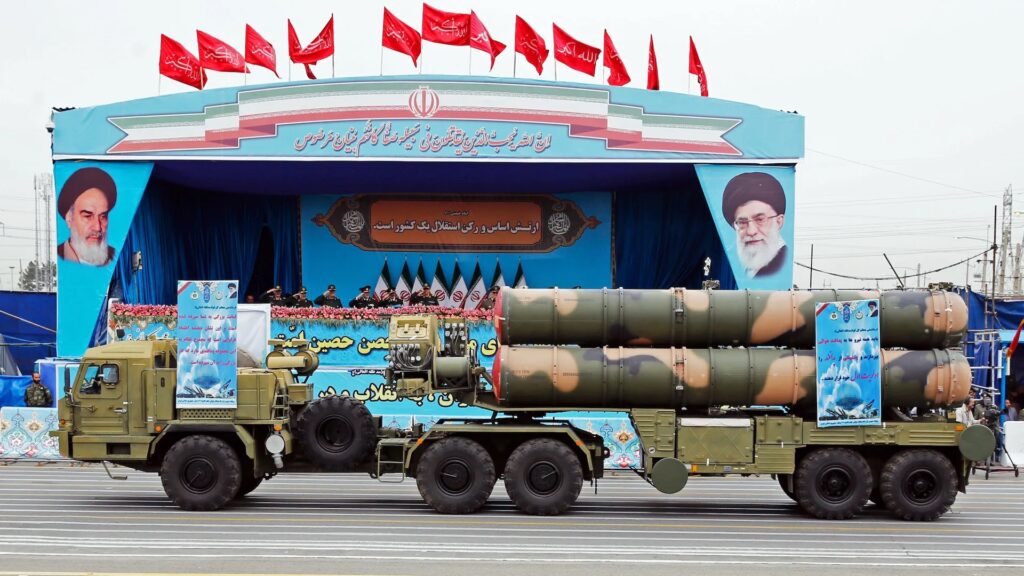
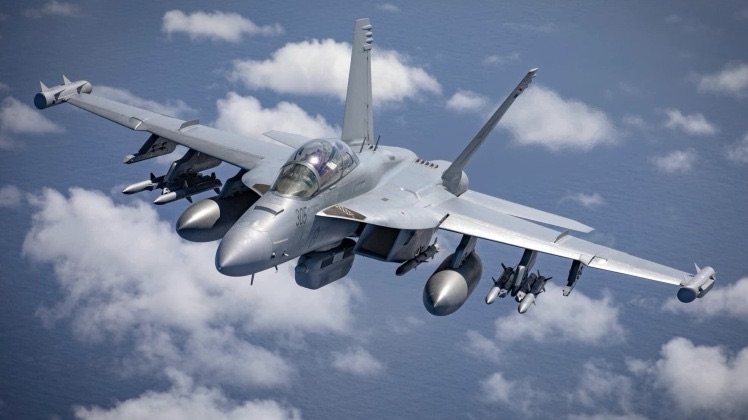
Satellite imagery has confirmed the redeployment of Iranian Air Force S-300PM-2 long range air defence systems to air defence sites near the capital Tehran, as well as to the second city of Isfahan. This has occurred amid a large scale buildup of U.S. forces around the country, with several hundred aircraft having been redeployed across the Atlantic and from the Pacific to support a possible offensive against Iranian targets. This buildup has included multiple specialised air defence suppression aircraft, among which are several squadrons of U.S. Navy EA-18G attack aircraft, and two squadrons of U.S. Air Force F-16CJ fighters. The S-300PMU-2 is one of just two post-Cold War types of surface-to-air missile systems known to have been procured by Iran from abroad, with the other being the short ranged Tor-M2 system acquired in the 2000s for cruise missile defence.
The Iranian Defence Ministry previously ordered Russian S-300PMU-1s systems in 2007, before the deal was unilaterally terminated by the new administration of President Dmitry Medvedev under Western and Israeli pressure. At a time of increased tensions between Russia and the West in 2016, an agreement was reached to provide the more capable S-300PMU-2 system, which is a direct predecessor to the S-400 system that currently forms the backbone of the Russian air defence arsenal. The systems reportedly integrate 48N6DM surface-to-air missiles, which have particularly advanced anti-missile capabilities due to their sophisticated sensors and high speeds exceeding Mach 14, allowing them to engage targets at very high supersonic speeds including hypersonic speeds exceeding Mach 8. Their 250 kilometre engagement ranges allow them to provide a wide area defence capability.
The deployment of Iranian S-300PMU-2 systems to protect two major cities follows widespread reports from Western sources that all the systems in Iranian service were destroyed in a few hours during an Israeli attacks in October 2024. This was widely disputed by analysts at the time, with the fact that Israel’s F-35 fighters cannot fire air-to-surface missiles due to their lack of Block 4 software being one notable factor that made this possibility seem remote. Nevertheless, Iran’s total lack of modern fighter or interceptor aircraft to support its ground-based systems has raised questions regarding their viability in the event of a large scale U.S. assault. With Iranian air defences having largely been disabled from the ground by Western and Israeli backed paramilitaries during clashes in June 2025, their capabilities have yet to be tested in high intensity engagements.
In July 2025 Deputy Operations Chief of the Iranian Armed Forces Rear Admiral Mahmoud Mousavi confirmed that the country’s air defence systems damaged during hostilities with Israel and the United States from June 13-24 had all been replaced. “Some of our air defences were damaged, this is not something we can hide, but our colleagues have used domestic resources and replaced them with pre-arranged systems that were stored in suitable locations in order to keep the airspace secure,” he stated. “We were able to cover the skies using existing and new systems, securing the airspace of our dear Iran… The enemy, despite its desperate efforts, failed to achieve its goals,” the admiral added. The reported replacement of lost and damaged air defence systems follows reports in earlier in the month from a number of regional sources that the Iranian Air Defence Forces were receiving Chinese-made long range air defence systems, which could provide a significantly superior capability to the S-300PMU-2.
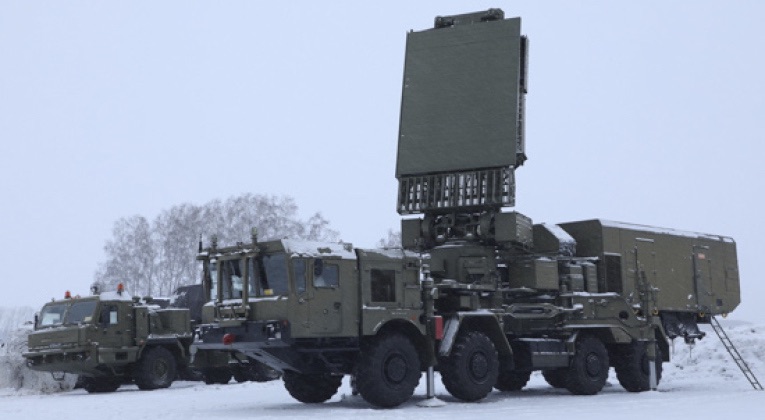
Only two regiments’ worth of S-300PMU-2 systems are known to have been procured by Iran, although followup orders were reportedin 2020 to have been placed for new missiles for the existing systems. The systems procured by Iran reportedly benefitted from a degree of customisation, and are known to use 96L6 target-acquisition radars, 30N6E2 target-engagement radars and 64N6E2 battle management radars. The 96L6 is a 3D acquisition radar that covers a wide range of altitudes, and is optimised for detecting low-flying targets such as unmanned aircraft and cruise missiles. Iran’s defence sector produces its own long range air defence systems, most prominently the Bavar 373, which began development in the early 2010s and has entered service in three major variants since 2016. The Iranian Defence Ministry’s decision to proceed with the procurement of Russian S-300PMU-2 air defence system in 2016, however, provided an indication that the Bavar 373 was not considered sufficient for the country’s long range air defence needs at the time. More capable variants of the indigenous system have since been brought into service however.
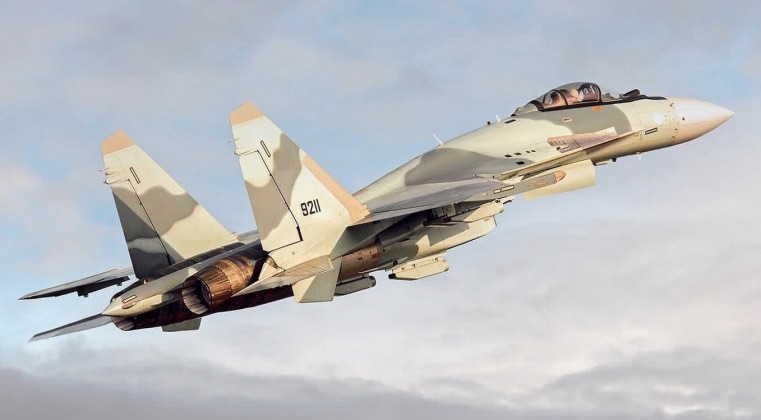
The capabilities of Iranian S-300 systems were previously expected to be enhanced considerably through their integration with new Su-35 long range air superiority fighters, which carry among the largest and most powerful radars of any fighter type in the world, and can thus serve as elevated sensors to improve ground-based systems’ situational awareness and reduce vulnerability to jamming. Although the Iranian Army has from January continued to receive new Mi-28 attack helicopters, however, there have been no signs of Su-35s arriving in the country. A significant shortcoming of the S-300PMU-2 is that NATO members have access to closely related systems, with Greek Air Force S-300PMU-1 systems having been used to train multiple NATO air forces and the Israeli Air Force, while Turkey, a longstanding adversary of Iran, more recently in 2019 acquired the S-400 system in 2019. The U.S. Marine Corps in November 2025 conducted exercises specifically aimed at training to tackle S-300PMU-2 systems.