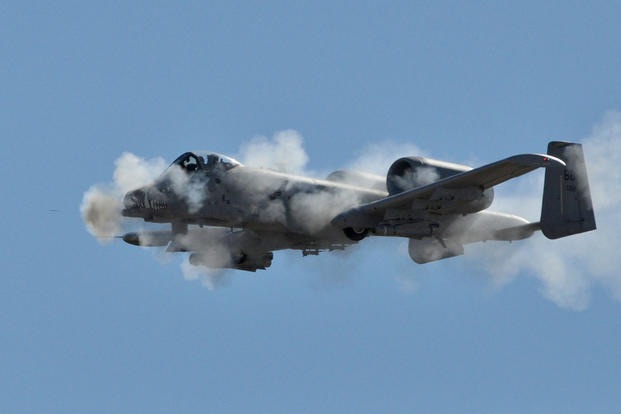
The A-10 Thunderbolt II, widely known as the Warthog, has long been regarded as one of the toughest and most reliable close air support aircraft ever built. Designed during the Cold War to survive intense ground fire, the A-10 once again proved its legendary durability after safely landing despite being struck by a missile during an active combat mission.
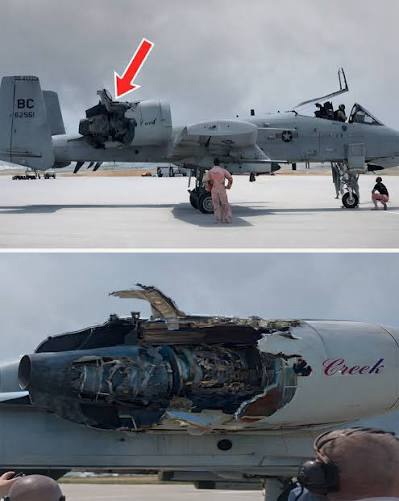
The incident occurred while the A-10 was supporting ground forces in a high-threat combat zone. The aircraft was flying at low altitude, a typical profile for close air support missions, when it was targeted by an enemy surface-to-air missile. Although the missile detonated near the aircraft, causing visible damage, the pilot managed to retain control and guide the aircraft back to a friendly airfield.
Reports indicate that the missile strike damaged part of the aircraft’s structure and systems, yet none of the critical flight controls were lost. This outcome highlights the A-10’s unique design philosophy: survivability above all else. Unlike many modern fighter jets that rely on speed and stealth, the A-10 was engineered to absorb damage and keep flying.
One of the key reasons the A-10 survived the strike is its titanium “bathtub” armor surrounding the cockpit. This armored shell protects the pilot from ground fire and shrapnel, allowing them to continue operating even after sustaining significant hits. Additionally, the aircraft’s flight control systems are redundant, meaning backup systems can take over if primary ones fail.
The A-10’s engines also play a critical role in its resilience. Mounted high and far apart on the fuselage, they reduce the likelihood that a single hit will disable both engines. In this incident, although one engine reportedly suffered damage, the other continued functioning well enough to maintain controlled flight.
Equally important is the human factor. The pilot’s training and calm decision-making under pressure were essential in bringing the aircraft home. Combat pilots train extensively for emergency scenarios, including missile damage, hydraulic failures, and partial system loss. The safe landing demonstrates not only the aircraft’s strength but also the professionalism and skill of the pilot.
The A-10 Warthog has a long history of surviving battle damage. During past conflicts, including the Gulf War and operations in Afghanistan and Iraq, multiple A-10s returned safely despite severe damage such as missing control surfaces, engine failures, and extensive structural hits. This reputation has earned the aircraft deep respect from both pilots and ground troops who rely on its support.

Despite ongoing debates about retiring the A-10 in favor of newer aircraft, incidents like this reignite discussions about its continued value on the modern battlefield. Its ability to loiter over combat zones, provide precise firepower, and survive heavy enemy fire remains difficult to replace.
In the end, the successful recovery of the missile-damaged A-10 stands as another testament to why the Warthog remains an icon of battlefield aviation. Built for the worst-case scenario, it once again proved that when things go wrong in combat, the A-10 is one of the few aircraft designed to bring its pilot home safely.