DID YOU KNOW? 🇺🇸
The United States has built some of the most powerful military machines in history—but one of the most mind-blowing isn’t a tank, a fighter jet, or even a warship. It’s a cargo aircraft so enormous that it has transported things most people would never imagine could fly. One of the most shocking examples? The C-5 Galaxy is so massive that it has carried a submarine inside its cargo hold.
Yes, you read that right—a submarine. Inside an airplane.
When people think of military aircraft, they often picture sleek jets tearing across the sky at impossible speeds. But behind every mission, every operation, and every global deployment, there’s a different kind of aircraft doing the heavy lifting. And when it comes to heavy lifting, few machines on Earth can compete with the Lockheed C-5 Galaxy, one of the largest military transport aircraft ever built.
The C-5 Galaxy isn’t just big—it’s absolutely gigantic. It’s the kind of aircraft that makes other planes look like toys sitting beside it. Seeing one on a runway is enough to make you stop and stare because it doesn’t feel real. It looks like something out of a science-fiction movie: a flying fortress designed to carry the biggest and heaviest equipment the U.S. military could possibly need anywhere in the world.
A Flying Giant With a Serious Purpose
The C-5 Galaxy was created during the Cold War era, when the United States needed the ability to move troops, vehicles, and massive supplies quickly across long distances. The goal was simple but ambitious: build a plane capable of carrying enormous cargo loads without relying on overseas shipping routes that could take weeks or months.
In war, time matters. Getting equipment across the world quickly can mean the difference between success and failure. The C-5 was designed to be the solution—a flying cargo ship that could cross continents and oceans in a single mission.
So… How Big Are We Talking?
To understand how the C-5 Galaxy could carry something as wild as a submarine, you have to understand the scale of this aircraft.
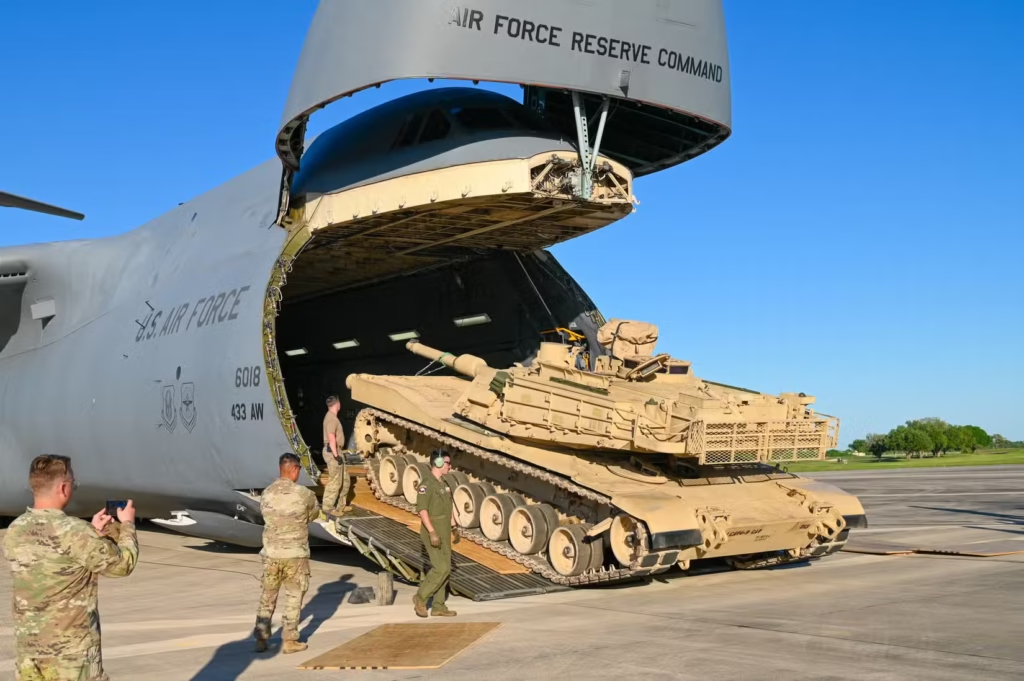
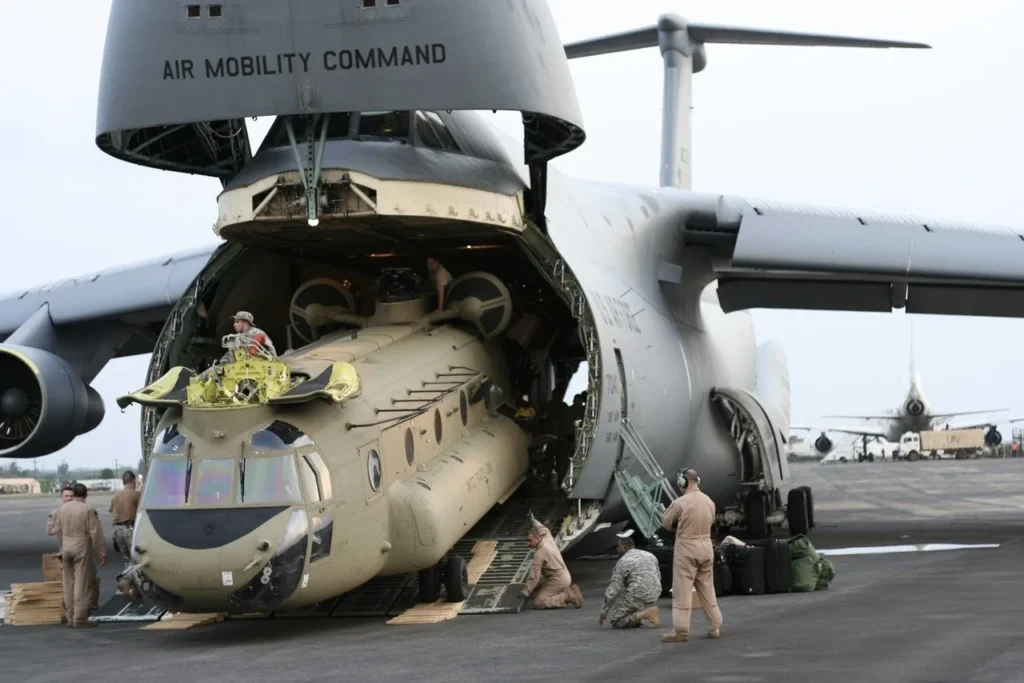
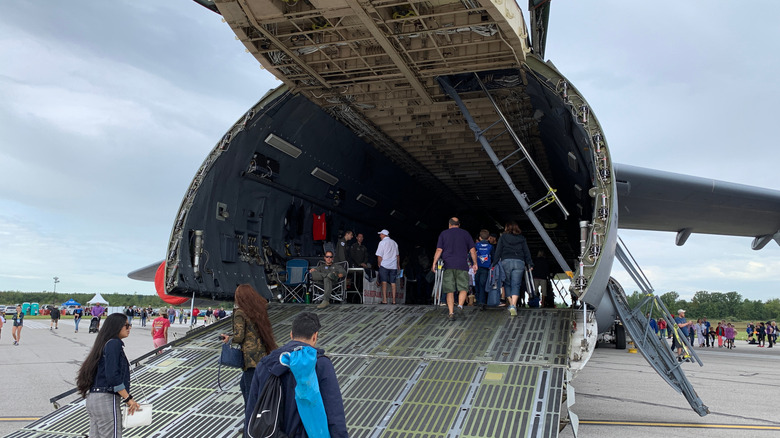
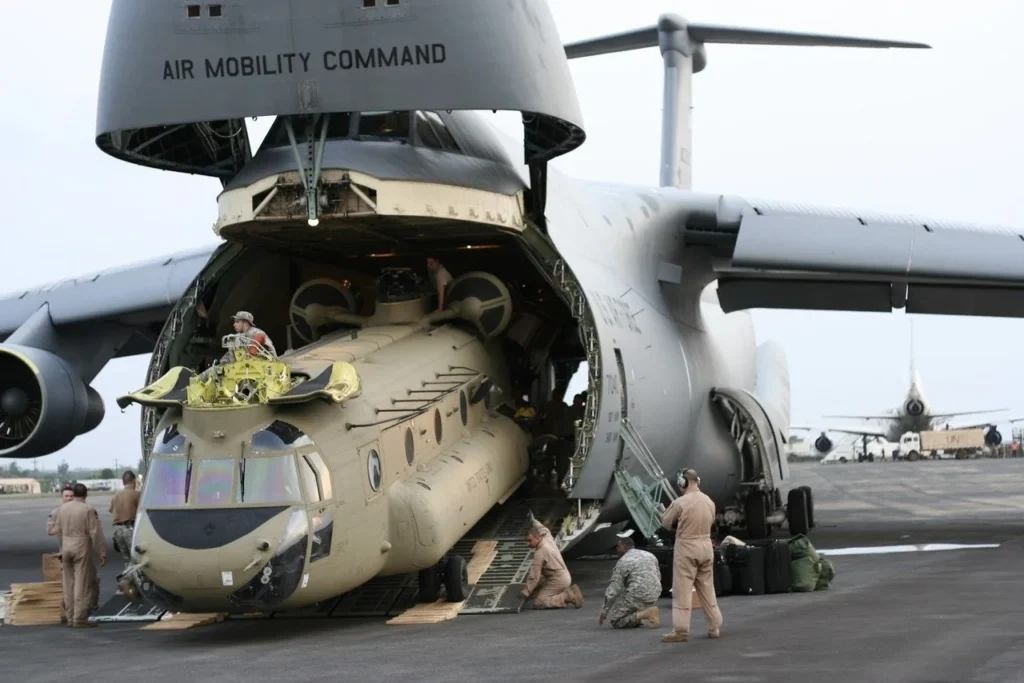
The cargo hold alone is so long and wide that it can fit large military vehicles with room to spare. Tanks, helicopters, armored vehicles, massive engines, and even multiple trucks can be loaded into the aircraft. It’s basically a flying warehouse with wings.
What makes the C-5 even more impressive is that it’s designed for efficient loading. Unlike many cargo planes that only open from the rear, the C-5 Galaxy can open from both the front and the back. That means cargo can be driven straight through the aircraft, making loading and unloading faster and more practical—especially during urgent operations.
Carrying a Submarine… Seriously?
So how does a plane carry a submarine?
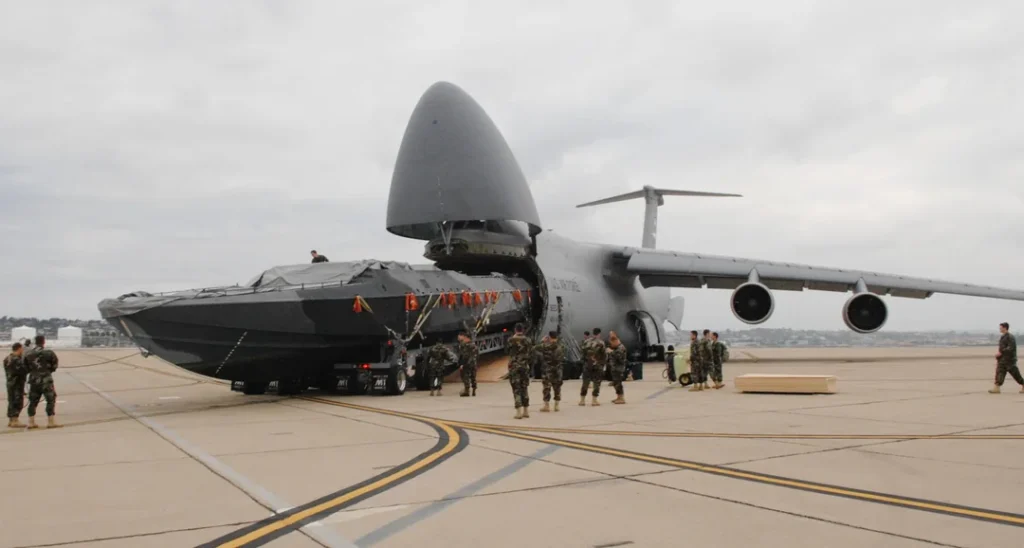
It’s important to clarify that we’re not talking about a full-sized nuclear submarine like the ones you see in movies—those are far too massive for any aircraft. But the C-5 Galaxy has been capable of transporting smaller submarine-type vehicles, mini subs, or specialized underwater equipment that can still be incredibly large and heavy.
Even if it wasn’t a full combat submarine, the idea is still insane. Submarines are built to survive deep ocean pressure, meaning they’re made from strong, thick materials. They’re heavy, bulky, and awkward to move. And yet, the C-5 Galaxy is one of the few aircraft powerful enough to make it possible.
Just imagine what that looks like: a massive aircraft sitting on a runway, its nose lifted open like a giant mouth, and inside is a submarine-shaped vehicle being loaded like it’s just another piece of cargo.
That’s the level of engineering we’re talking about.
Why Would the Military Do This?
Transporting underwater equipment by air may sound strange at first, but it makes perfect sense in certain situations.
If the U.S. military needs to deploy special underwater vehicles quickly—whether for rescue missions, special operations, research, or strategic purposes—shipping them by sea could take too long. Air transport allows rapid deployment to almost anywhere in the world.
The C-5 Galaxy gives the U.S. the ability to move unique and oversized equipment on demand. That kind of flexibility is priceless when missions are time-sensitive.
More Than Just Cargo—It’s Global Power
The real reason the C-5 Galaxy is so legendary is because it represents something bigger than size alone. It represents reach.
America’s ability to respond quickly across the globe depends on logistics—moving equipment, supplies, and personnel where they need to be, when they need to be there. A plane like the C-5 is one of the key tools that makes that possible.
This aircraft can deliver massive loads to distant locations, including places with limited infrastructure. It’s built to operate in tough conditions, making it a reliable part of military transport systems.
A Machine Built for the Impossible
The C-5 Galaxy isn’t just a plane. It’s an engineering statement.
Everything about it is designed for extreme capability: its huge wings, its powerful engines, its towering landing gear, and its enormous cargo space. It was built to take on tasks that would be impossible for normal aircraft.
And that’s why the submarine story is so powerful. Because it perfectly shows what makes the C-5 special. It’s not about carrying luggage. It’s about carrying the unthinkable.
A plane that can transport a submarine isn’t just large—it’s a symbol of how far engineering can go when the mission demands it.\
Final Thought
So the next time you see a military cargo aircraft flying overhead, remember: it might not be flashy like a fighter jet, but it could be carrying something extraordinary—something that seems too big to fly.
Because when it comes to the C-5 Galaxy, the limits of what an airplane can carry are far beyond what most people imagine.
DID YOU KNOW? 🇺🇸
The C-5 Galaxy is so massive that it has carried a submarine inside its cargo hold… and that fact alone proves it’s one of the most incredible aircraft ever built.