The roar of jet engines is nothing unusual aboard the USS Enterprise. For decades, the massive nuclear-powered carrier launched and recovered aircraft in a rhythm as steady as the ocean itself. But on that tense afternoon, the familiar choreography of flight operations was shattered when an EA-6B Prowler went down on the flight deck.
The EA-6B Prowler, a four-seat electronic warfare aircraft designed to jam enemy radar and communications, had just completed a demanding mission cycle. As it approached the carrier for landing, the deck crew stood ready in their color-coded jerseys—yellow directing traffic, green handling equipment, purple fueling, red prepared for ordnance, and white ensuring safety compliance. Every movement was deliberate, every signal precise.
Then something went wrong.
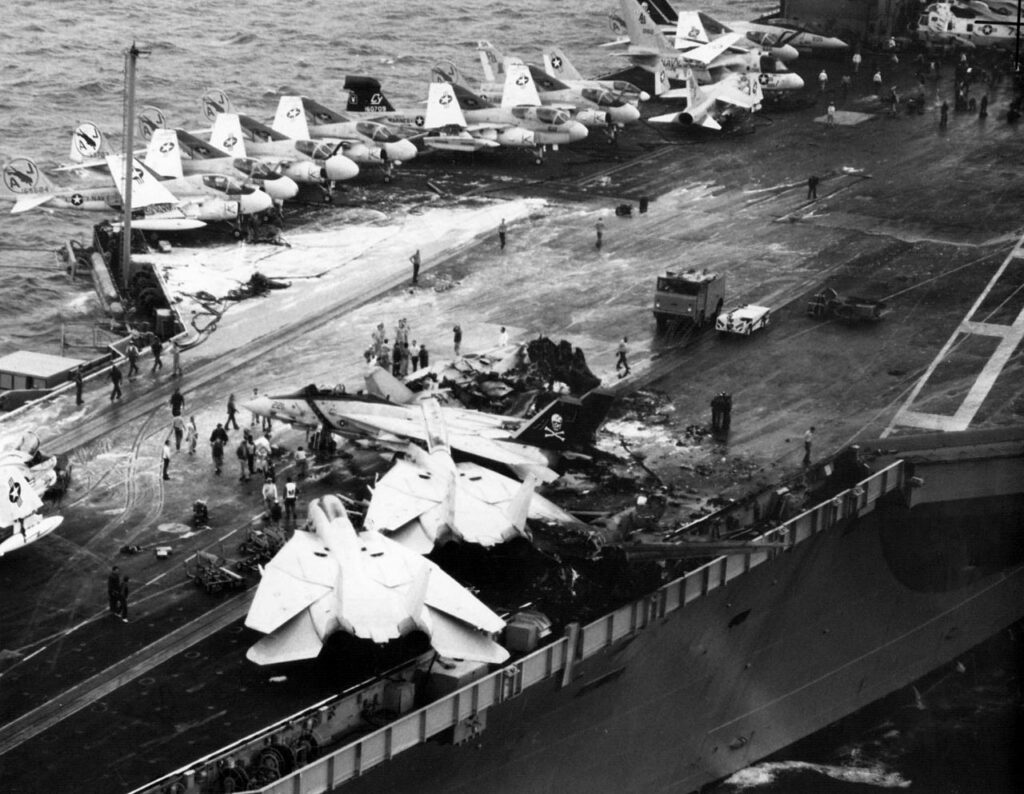
Witnesses later described a sudden instability during landing rollout. Whether caused by a mechanical malfunction, arresting gear issue, or pilot miscalculation, the aircraft failed to decelerate as expected. Within seconds, the jet veered and slammed onto the deck with violent force. The impact echoed across the carrier, metal scraping against non-skid steel, sparks flying beneath the fuselage.
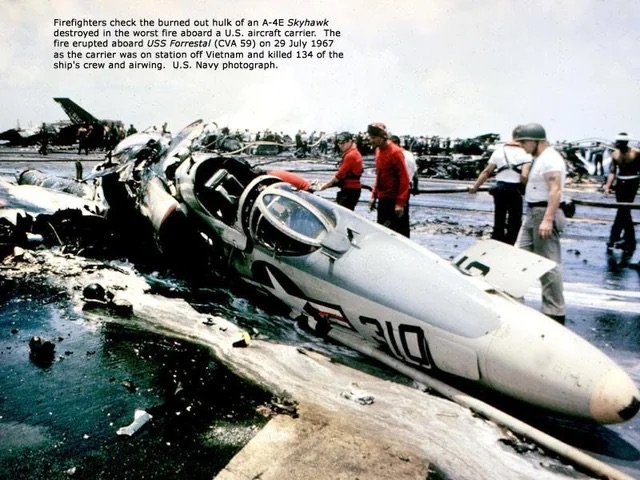
The immediate aftermath was chaos—but controlled chaos. On an aircraft carrier, every crew member is trained for worst-case scenarios. The moment the crash occurred, the flight deck crew responded with practiced urgency. Red-shirted crash and salvage teams raced forward, fire extinguishers and hoses already in hand. The risk of fuel ignition was critical; jet fuel spilling across a hot deck can transform a mishap into a catastrophe in moments.
Thick smoke rose from the damaged Prowler, its wings twisted and nose crumpled. Emergency crews sprayed foam across the wreckage to suppress potential flames. Sailors worked in coordinated silence, shouting only essential commands over the noise of alarms and wind. The flight deck, normally a ballet of motion, became a battlefield of rescue and containment.
Medical teams arrived within minutes. Stretchers were positioned as corpsmen assessed the aircrew. The EA-6B’s cockpit, reinforced but heavily damaged, had absorbed much of the impact. Injured personnel were quickly extracted and rushed below deck to the carrier’s medical bay. In high-risk naval aviation, survival often depends on seconds—and those seconds were not wasted.
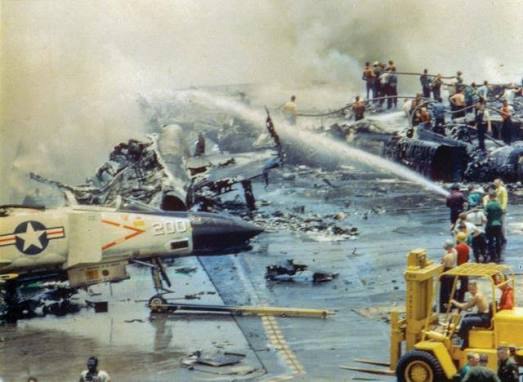
Below deck, the situation was equally intense. Damage control teams evaluated structural integrity, checking for deck penetration or fire spreading to hangar spaces beneath. The USS Enterprise, though enormous and resilient, required constant vigilance after any onboard accident. Even minor structural damage can disrupt flight operations and compromise safety.
Within an hour, flames were fully suppressed, and the area was cordoned off. Twisted debris was carefully examined by safety officers and investigators. The Navy’s aviation mishap protocol began immediately—photographs taken, data recorded, witness statements collected. Every bolt, cable, and scorched panel would later be analyzed to determine the chain of events.
For the crew, however, the emotional aftermath lingered longer than the smoke.
Flight deck sailors operate in one of the most dangerous working environments in the world. They are accustomed to jet blast, spinning propellers, and heavy equipment moving inches from their boots. Yet a crash like this is a stark reminder of how quickly routine can turn into crisis. Conversations that evening in the mess decks were quieter than usual. Relief that lives were saved mixed with sobering reflection.
Despite the damage, carrier operations resumed sooner than many might expect. That resilience defines naval aviation. After inspections cleared the deck and repairs were made, aircraft once again lined up for launch. Catapults fired. Arresting wires caught incoming jets. The mission continued.
The wrecked EA-6B Prowler was eventually removed, its remains transported for detailed analysis. Findings would contribute to improved procedures, enhanced safety measures, and technical corrections if needed. In naval aviation, every mishap becomes a lesson—sometimes written in twisted metal and scorched paint.
For the USS Enterprise, a vessel that served for over 50 years, the incident became one of many trials faced across decades of deployments. For the sailors who witnessed it firsthand, it became a defining memory—a moment when training, courage, and discipline prevented tragedy from becoming disaster.
When night fell over the ocean, the flight deck lights glowed as they always had. The sea stretched endlessly beyond the carrier’s bow. And though one aircraft had fallen, the spirit of the crew remained unshaken—steady, vigilant, and ready for the next launch.