Introduction
The Shahed-136 is a one-way attack drone, often called a “kamikaze drone” or “loitering munition.” Unlike traditional drones that return to base after completing surveillance missions, a loitering munition carries explosives and destroys itself when it strikes its target.
This type of weapon is designed to fly toward a target area, loiter or patrol for a period of time, and then crash directly into the target, detonating its explosive warhead. Because of its simple design and low production cost, the Shahed-136 can be produced in large numbers and launched in swarms, making it an effective weapon for overwhelming enemy defenses.
The drone has become particularly well known due to its use in conflicts such as the Russia-Ukraine war, where it has been used to attack infrastructure, military bases, and energy facilities.
Development and Origin
The Shahed-136 was developed by Iran as part of its effort to build advanced unmanned systems despite international sanctions. Iran has invested heavily in drone technology over the last two decades, developing a wide range of reconnaissance and combat UAVs.
The Shahed-136 is believed to have entered service around 2021, although earlier prototypes may have existed before that time.
Iran designed the drone to provide a low-cost alternative to cruise missiles, allowing long-range strikes without the enormous expense associated with advanced missile systems. While a modern cruise missile may cost hundreds of thousands or even millions of dollars, the Shahed-136 reportedly costs between $20,000 and $50,000 per unit, making it far more economical for large-scale attacks.
Design and Structure
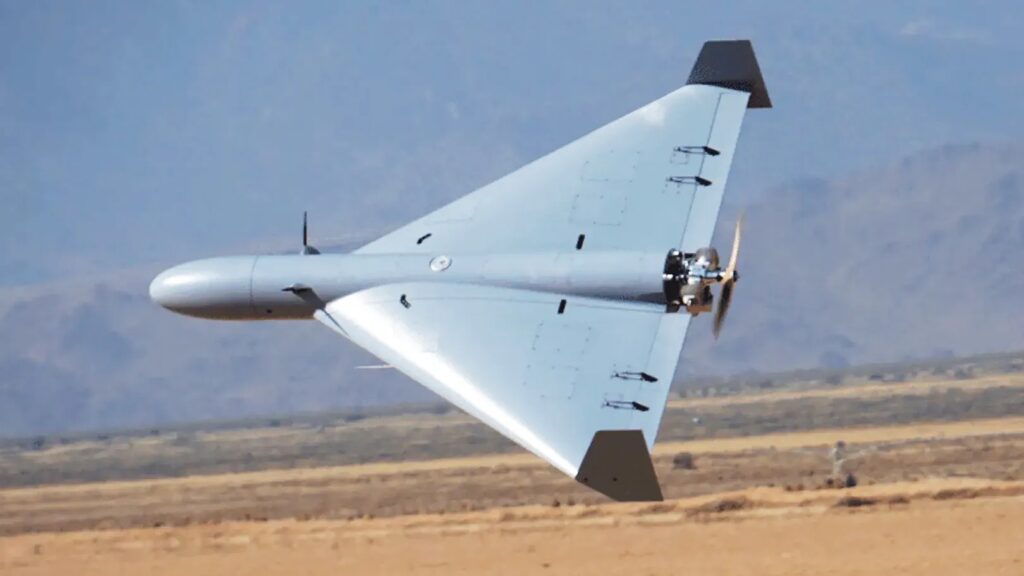
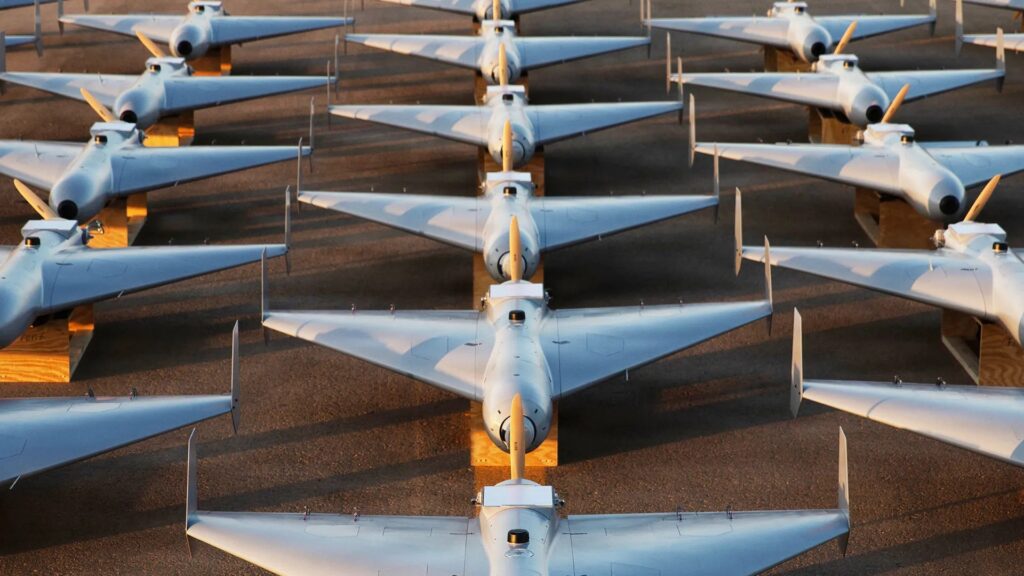
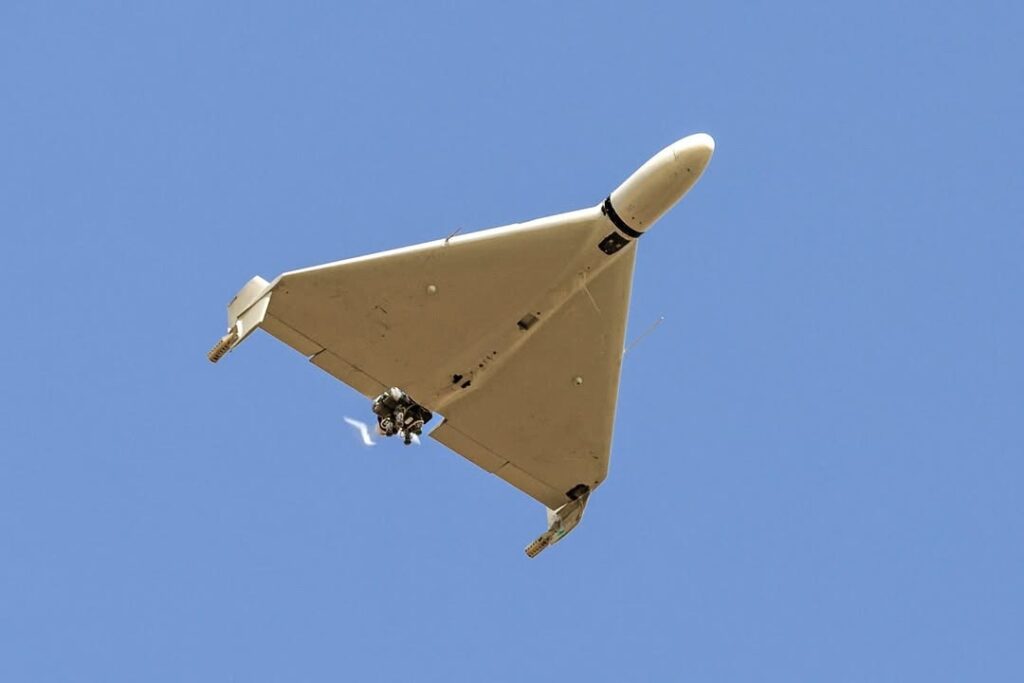
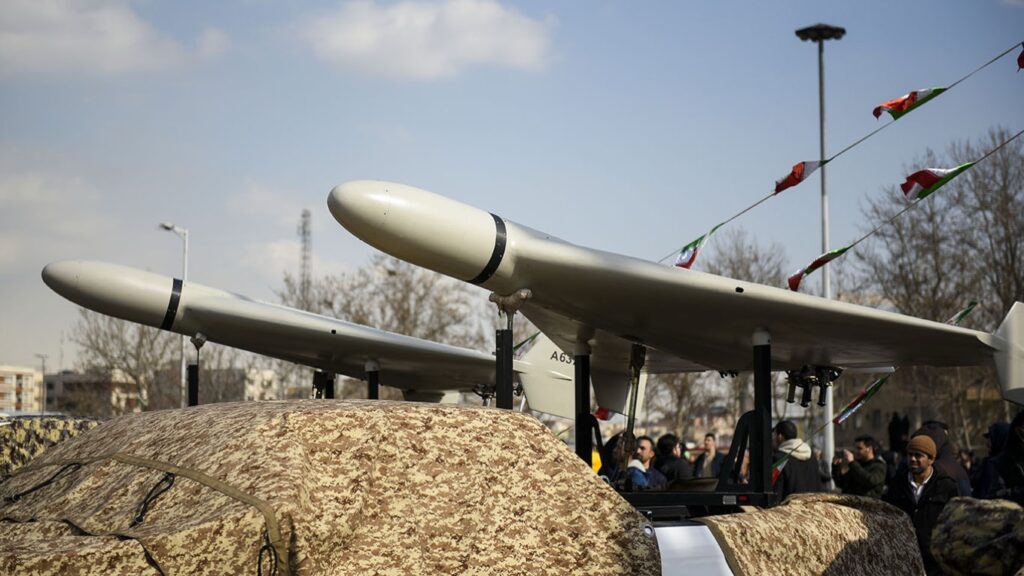
One of the most recognizable features of the Shahed-136 is its unusual delta-wing design. The drone has a triangular wing shape with small vertical stabilizers at the tips, giving it a distinctive silhouette in flight.
Key structural features include:
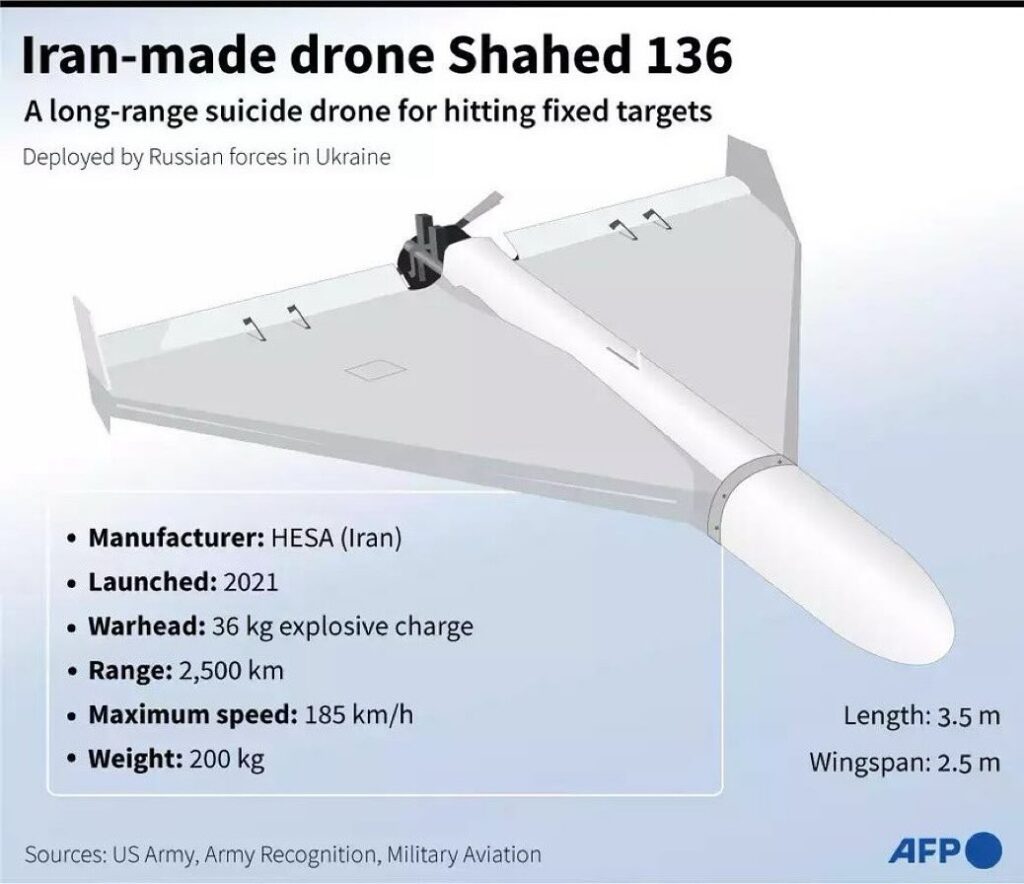
Length: approximately 3.5 meters Wingspan: about 2.5 meters Weight: roughly 200 kilograms Engine: rear-mounted piston engine with pusher propeller
The engine is positioned at the back of the drone and drives a two-blade propeller that pushes the aircraft forward. This configuration is known as a pusher-propeller design, commonly used in unmanned aircraft because it allows the front of the drone to carry sensors and explosives.
The body of the drone is typically constructed from lightweight composite materials such as fiberglass and carbon-reinforced components. These materials help reduce weight and may also slightly reduce radar detection.
Performance and Specifications
Although it is relatively simple compared with modern military aircraft, the Shahed-136 still has impressive performance for a low-cost drone.
Main specifications
Maximum speed: about 185 km/h Range: 1,000–2,500 km Endurance: up to 6–8 hours or longer Maximum altitude: about 4,000 meters Warhead weight: 30–50 kg of explosives
The drone’s range allows it to strike targets far beyond the battlefield, making it suitable for strategic attacks on infrastructure such as power plants, fuel depots, and military installations.
Guidance and Navigation
The Shahed-136 uses a relatively simple but effective navigation system.
The drone typically relies on:
Inertial Navigation System (INS) Satellite navigation such as GPS or GLONASS
Before launch, operators program the coordinates of the target into the drone’s onboard computer. Once launched, the drone flies autonomously along the programmed route until it reaches the target location.
Because it does not require continuous remote control, the drone is harder to disrupt than remotely piloted UAVs. However, it can still be affected by electronic warfare systems that interfere with satellite signals.
Some upgraded versions reportedly include improved anti-jamming technology and communication systems to make them more resistant to electronic countermeasures.
Launch System
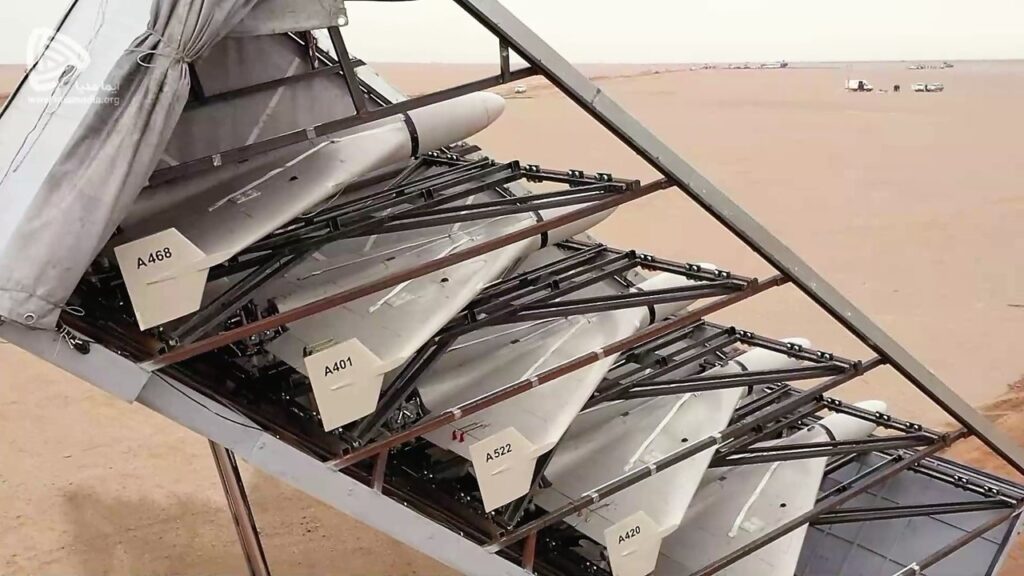
The Shahed-136 is typically launched from mobile platforms, often mounted on military trucks. A launcher may carry multiple drones at once, allowing them to be fired in rapid succession.
This launch method enables several important tactical advantages:
Mobility: launch vehicles can relocate quickly. Surprise: drones can be launched from hidden locations. Swarm attacks: multiple drones can be launched simultaneously.
When launched in large numbers, these drones can overwhelm air-defense systems, forcing defenders to intercept many targets at once.
Combat Role
The Shahed-136 is primarily designed for attacks against stationary ground targets. Examples include:
Military bases Radar installations Ammunition depots Power stations Fuel storage facilities Command centers
The explosive warhead detonates when the drone impacts the target, causing significant damage similar to that of a large artillery shell or small missile.
Because the drone is relatively slow and noisy, defenders can sometimes detect it in time. However, when dozens of drones are launched simultaneously, defending against them becomes much more difficult.
Use in Modern Conflicts
The Shahed-136 has been used in several conflicts in recent years.
One of the most widely reported cases is its use in the Russia-Ukraine war, where the drone has been employed to attack Ukrainian infrastructure, including energy facilities and cities.
Russia reportedly uses its own version called “Geran-2.” These drones are often launched in large nighttime waves to overwhelm Ukrainian air defenses.
More recently, reports indicate the drone has also been used in Middle Eastern conflicts and regional tensions, demonstrating its growing role in modern warfare.
Advantages
The Shahed-136 has several advantages that explain its widespread use:
1. Low cost
Compared with cruise missiles, the drone is extremely inexpensive.
2. Long range
It can travel over 1,000 kilometers to reach distant targets.
3. Swarm capability
Multiple drones can be launched at once, overwhelming defenses.
4. Simplicity
Its simple design allows rapid mass production.
Limitations
Despite its effectiveness, the drone also has several weaknesses.
Slow speed
At around 185 km/h, it is much slower than missiles.
Loud engine noise
The piston engine produces a distinctive buzzing sound.
Vulnerable to air defenses
Modern anti-aircraft systems, fighter jets, and electronic warfare can intercept or disrupt it.
Impact on Modern Warfare
The Shahed-136 represents a major shift in how wars are fought. Instead of relying only on expensive missiles and aircraft, militaries can now deploy large numbers of inexpensive drones to strike targets.
This strategy creates an economic imbalance, where defenders may have to use extremely costly air-defense missiles to destroy relatively cheap drones.
As a result, many countries are now investing heavily in counter-drone technology, including radar systems, electronic warfare equipment, and specialized anti-drone weapons.
Conclusion
The Shahed-136 is one of the most influential military drones of the modern era. With its long range, relatively powerful warhead, and extremely low cost, it has changed the way many militaries approach long-range strike operations.
Although it is technologically simple compared with advanced aircraft or missiles, its ability to be launched in large numbers makes it a powerful strategic weapon. The growing use of drones like the Shahed-136 shows that unmanned systems will play an increasingly important role in future conflicts, reshaping air warfare and forcing nations to develop new defensive strategies.
Video