A number of questions remain unanswered more than a day after the fatal shooting of a woman in Minneapolis by a US Immigration and Customs Enforcement officer, potentially undermining official accounts of what led up to the gunfire and fueling tension in the Twin Cities.
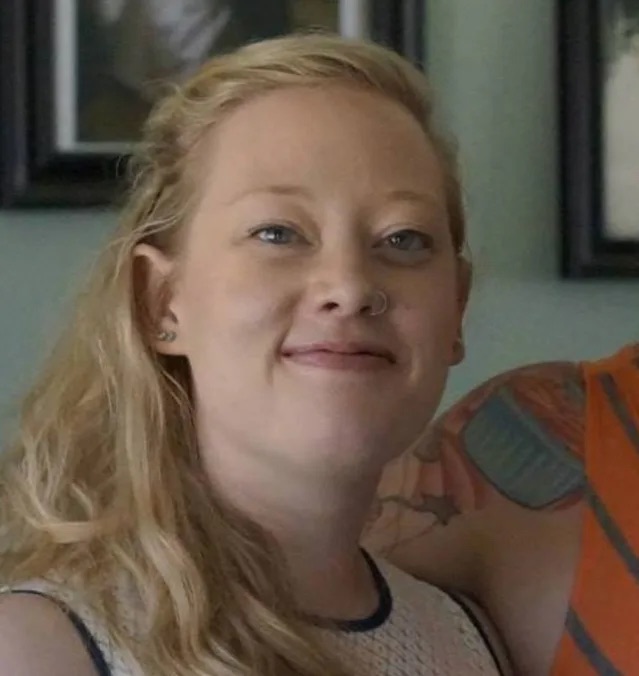
Federal officials, including President Donald Trump and Homeland Security Secretary Kristi Noem, were quick Wednesday to accuse the victim, 37-year-old Renee Nicole Good, of trying to use her vehicle to kill or harm the ICE agents.
But footage from the scene is nuanced. And with Minnesota officials alleging they have been effectively barred from investigating, it’s unclear whether a robust, public accounting will ever take place.
Here are a few of the unresolved questions, and why their answers are significant.
What happened immediately prior to the shooting?
One of the critical gaps in our understandingof what happened is what, if any, prior contact occurred between Good and the ICE agents.
“We don’t see the beginning, we don’t see sort of how we got to this moment,” CNN Senior National Security Analyst Juliette Kayyem said Thursday.
The Department of Homeland Security has said agents were performing a “targeted operation” Wednesday when one of their vehicles got stuck in the snow. As officers worked to push out the vehicle, Noem said, a “mob of agitators” who had been antagonizing agents throughout the day tried to impede their efforts.
Videos of the shooting show much of what unfolded during the subsequent deadly encounter: In one, the vehicle driven by Good is seen parked in the roadway, almost perpendicular to the lane of traffic, for about three minutes. Another that starts shortly before the gunfire shows Good wave a vehicle past her. She then waves at a second vehicle, a gray pickup truck. Rather than driving around her, two ICE agents get out.
One swiftly approaches the driver’s side door as the vehicle starts to move in reverse. The other, who will soon fire the fatal shots, approaches the front of the vehicle, as the officers are heard repeatedly telling the woman, “Out of the car.”
When Good’s vehicle starts to move forward, its front wheel turned to the right, seemingly directed away from the officers, the ICE agent at the front of Good’s SUV pulls out his pistol and points it at the driver.
One video appears to show the vehicle make contact with the officer before he fires the first gunshot. Another video doesn’t capture that possible point of contact, but the officer’s body is seen moving away from the front of the vehicle and to the driver’s side of the car.
Two more gunshots sound as the vehicle pulls away and accelerates before crashing nearby.
The agents’ demand that Good exit her vehicle is suggestive of an intent to take her into custody. For what, exactly, is unclear.
What was the legal basis for stopping her? And if Good had complied, what did the agents intend to do with her? Arrest her? If so, what charge would she have faced?
These are gaps that DHS has not yet attempted to fill in publicly. But the information is essential to understanding the chain of events that led to Good’s killing.
DHS did not immediately respond to a request for comment Thursday.
Did the agent act according to policy?
Officials have not publicly identified the agent involved. On Thursday, DHS Assistant Secretary Tricia McLaughlin confirmed he had more than 10 years of experience as an ICE deportation officer. Noem said he was “an experienced officer who has served a number of years” and that he acted according to his training.
A decade of service would indicate this officer is not among the legion of inexperienced agents recently brought on as part of a DHS hiring blitz to realize the president’s immigration policy.
But the breadth of his experience also raises questions about choices made prior to the shooting, and whether his actions indeed comport with DHS policy, training and commonly held law enforcement practice.
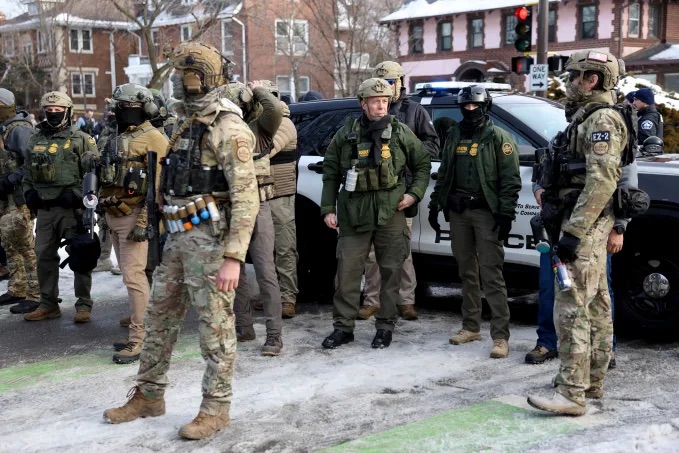
For instance, ICE officers are trained to approach a vehicle from the side, forming a “tactical L” to avoid placing themselves in front of the vehicle and potential danger. But footage of Wednesday’s shooting shows the officer approached the front of the vehicle.
Separately, while DHS policy allows for the use of deadly force when necessary, it generally prohibits officers from shooting at the operator of a moving vehicle – widely viewed as tactically unsound by many major cities’ police departments.
A 2023 study by the Police Executive Research Forum, an influential law enforcement think tank, recommended agencies’ policies “should prohibit shooting at or from a moving vehicle,” unless the driver of the vehicle is using it as a “weapon of mass destruction” in a situation like a ramming attack against a crowd or car bombing.
CNN law enforcement analyst Jonathan Wackrow said he had been in a similar situation during an arrest operation when he was an agent for the US Secret Service.
Bb“In that moment, I chose not to fire my weapon, because firing a weapon at a moving vehicle is a high risk, very dangerous option,” Wackrow said.
John Amaya, the former ICE deputy chief of staff under President Barack Obama, told CNN Thursday he was withholding judgment about Wednesday’s shooting while the investigation unfolded. Still, “If the officer could have just jumped out of the way and let the car pass, that’s what he should have done,” Amaya said.
“And the questions will be raised to him when he’s asked by various investigators … as to whether or not he reasonably could have jumped out of the way, because it would have been a requirement,” Amaya said.
What consequences, if any, will the officer face?
To Amaya’s point, reviews of the shooting will take two paths.
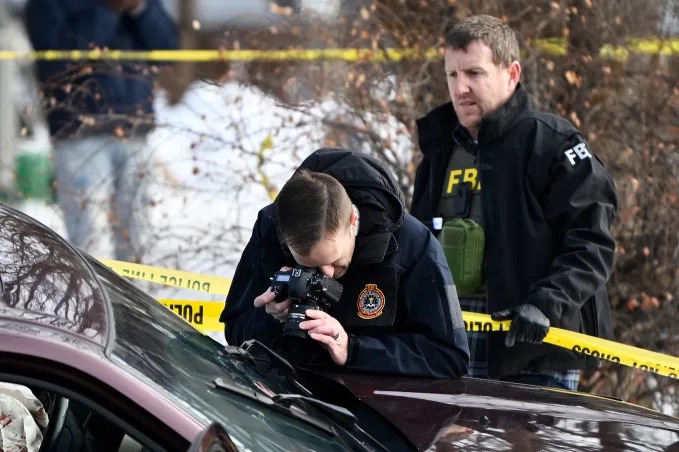
One will involve the administrative process inside DHS and ICE. The agencies will examine whether the agents acted Wednesday within DHS guidelines, training and tactics, including whether the car stop and the shooting were within policy.
That review could lead to the firing, suspension or retraining of the officer – or nothing at all, depending on the findings.
DHS will investigate the shooting, and in every use-of-force incident “there are standard protocols followed and there is no exception to that here,” a senior DHS official told CNN.
The other path is an investigation led by the FBI. That investigation will be aimed at determining whether the agent was under threat of “imminent death or serious bodily injury,” or whether he acted with reckless disregard for human life and in a way a reasonable person with similar training would not.
As with any officer-involved shooting, culpability – or justification – for the lethal use of force will hinge on the officer’s mindset. What he says he perceived Wednesday, and whether he felt he or his colleagues were at risk of imminent injury or death, will carry a great deal of weight legally.
His mindset may be informed by his own recent history: According to court documents, he was dragged last summer for about 100 yards when his arm got pinned in the back window of a vehicle as a suspect sped away. The agent suffered injuries to his arm and hand.
The encounter occurred in June, when federal officials moved in to arrest an undocumented immigrant who had been charged with sexually abusing his 16-year-old stepdaughter in 2022, according to a court affidavit written by an FBI agent involved in the case.
The officer could tell investigators that moment was front-and-center in his mind Wednesday – that he believed he would be hit by Good’s vehicle and that his partner, hanging on the driver’s side door, could be dragged away, necessitating his use of force.
For now, the criminal investigation is being overseen by the FBI, but Trump, Vice President JD Vance and Noem have all publicly concluded the agent acted properly and the shooting was justified. Despite early indications the FBI would collaborate with Minnesota’s Bureau of Criminal Apprehension, the BCA said Thursday it was forced to withdraw from the investigation after the FBI took control.
“I’m not in the prediction game, but I think you can bet that there is no chance that this agent actually gets prosecuted,” said CNN senior correspondent Josh Campbell, a former FBI agent.
“Because what that would take is for the attorney general and the FBI to counter the president, the vice president, Homeland Security secretary in this politically charged era,” Campbell said. “I just don’t see that happening.”
Gov. Tim Walz, a Democrat, has called for state authorities to be involved, and the Hennepin County Attorney’s Office said it is “exploring all options to ensure a state level investigation can continue.”