USS Rodney M. Davis (FFG-60) Sinks After Being Hit by a Harpoon Missile
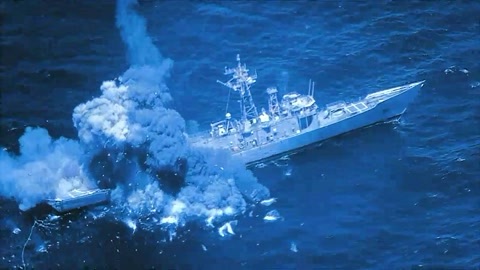
The former USS Rodney M. Davis (FFG-60), a U.S. Navy guided-missile frigate, met its dramatic end after being struck by a Harpoon anti-ship missile during a live-fire sinking exercise. Once an active warship patrolling the world’s oceans, the vessel was deliberately sunk as part of a carefully planned naval training operation designed to test modern weapons and tactics under realistic combat conditions.
Commissioned in 1982, USS Rodney M. Davis was an Oliver Hazard Perry-class frigate built during the Cold War era. These ships were designed primarily for anti-submarine warfare but were also capable of engaging surface and air threats. For more than two decades, Rodney M. Davis served in the U.S. Navy, participating in numerous deployments, multinational exercises, and maritime security missions. The ship played a key role in protecting carrier strike groups and maintaining stability in contested waters.
After being decommissioned, the frigate was selected to serve one final purpose: acting as a target ship during a SINKEX (sinking exercise). Such exercises allow the Navy to evaluate the effectiveness of weapons systems like the AGM-84 Harpoon missile, while also providing valuable training data for fleet commanders and weapons engineers. Before the exercise, the ship was stripped of hazardous materials to reduce environmental impact, ensuring compliance with safety and environmental regulations.
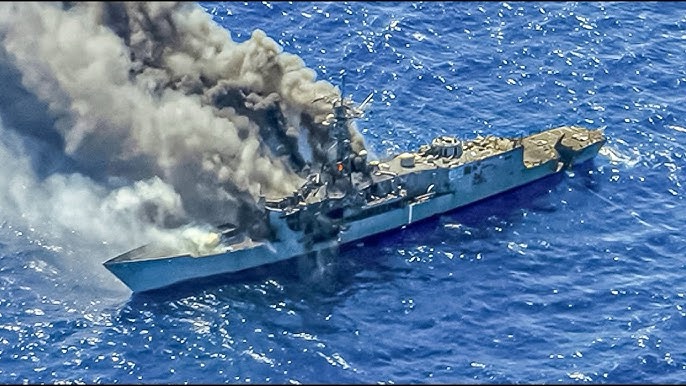
During the exercise, the Harpoon missile struck the hull of USS Rodney M. Davis with devastating precision. Designed to skim just above the sea surface, the missile penetrated the ship’s defenses and detonated, causing severe structural damage. Observers reported a large explosion followed by thick smoke rising from the vessel as fires spread internally. The impact demonstrated the destructive power of modern anti-ship missiles against legacy naval platforms.
Despite the damage, the ship did not sink immediately. Like many warships, Rodney M. Davis was built with compartmentalization to improve survivability. However, after sustaining additional damage and flooding, the frigate eventually listed heavily and slipped beneath the waves. Its sinking marked the end of a long service life and provided crucial real-world data for naval analysts.
The event underscored the evolving nature of naval warfare. Anti-ship missiles such as the Harpoon remain a critical threat in modern conflicts, capable of neutralizing surface combatants quickly and efficiently. Exercises like this help naval forces refine defensive strategies, improve ship survivability, and adapt to emerging maritime threats.
For many veterans who served aboard USS Rodney M. Davis, the sinking was an emotional moment. While the ship was no longer active, it represented years of service, camaraderie, and sacrifice. Seeing it deliberately destroyed was a reminder that warships, like the sailors who crew them, eventually pass into history.

In the end, USS Rodney M. Davis fulfilled its final mission. By contributing to the advancement of naval readiness and weapons testing, the ship continued to serve the Navy even after decommissioning. Its controlled sinking provided invaluable insights that will help protect future crews and shape the design of next-generation warships.