The Wreck of the USS Arizona Continues to Leak Oil Ever Since Pearl Harbor
More than eighty years have passed since the attack on Pearl Harbor, yet the wreck of the USS Arizona still holds reminders of that tragic morning beneath the surface of the water. While most people remember the ship as a symbol of American sacrifice and a turning point in World War II, fewer realize that the Arizona continues to release oil into the harbor even today. This slow and steady leak has become one of the most haunting and enduring legacies of the December 7, 1941 attack. The ship carried a massive amount of fuel—estimated at around 1.5 million gallons—and some experts believe that the remaining oil could continue leaking for centuries, possibly even as long as 500 years. In a way, the Arizona is not only a memorial to the past, but also a reminder that the consequences of war can stretch far into the future.
The USS Arizona was a Pennsylvania-class battleship commissioned in 1916. It served for decades before becoming one of the most famous ships in American history. On the morning of the Pearl Harbor attack, the Arizona was moored alongside Ford Island in Hawaii. When Japanese aircraft began bombing the naval base, the battleship became one of the primary targets. Several bombs struck the ship, but one catastrophic hit changed everything. A bomb penetrated near the ship’s forward ammunition magazines, causing a massive explosion. In an instant, the Arizona was torn apart, engulfed in flames, and quickly sank into the harbor.
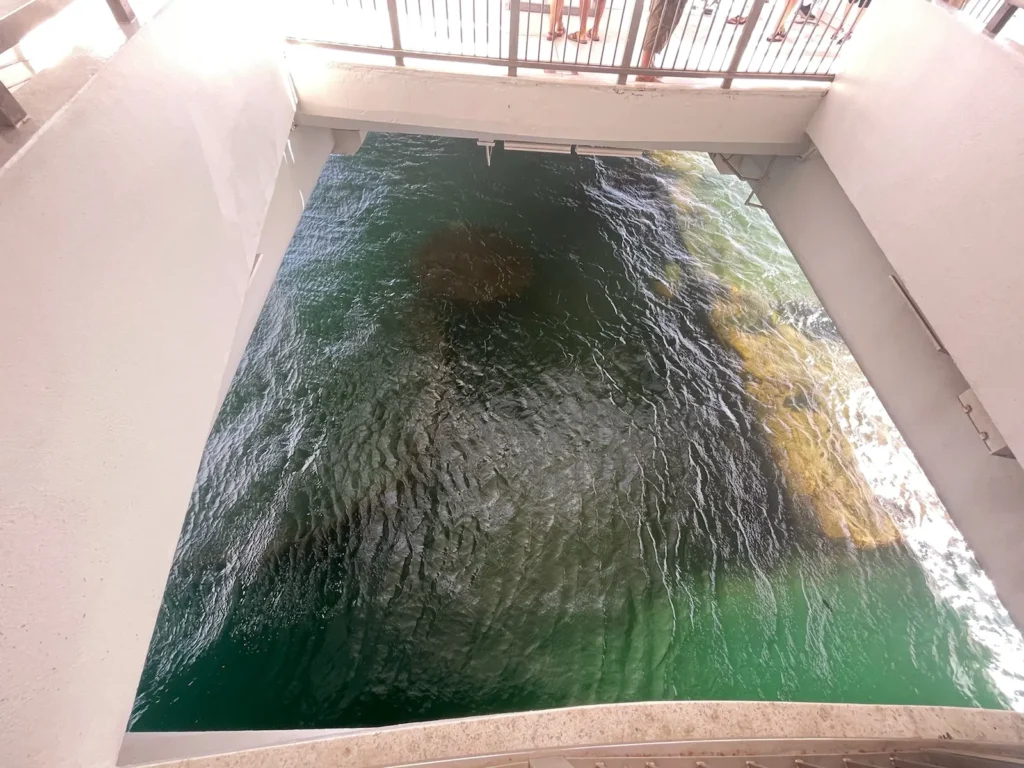
The destruction was so sudden and violent that many sailors aboard had no chance to escape. Over 1,100 crew members lost their lives, making the USS Arizona the site of the greatest single loss of life for the U.S. Navy in the Pearl Harbor attack. The wreck remained where it sank, partially submerged, and became a permanent grave for those who died. For this reason, the ship was never removed. Instead, it was preserved as a war memorial and a sacred site. Today, the USS Arizona Memorial sits above the sunken ship, allowing visitors to honor the fallen while looking down at the remains of the vessel below.
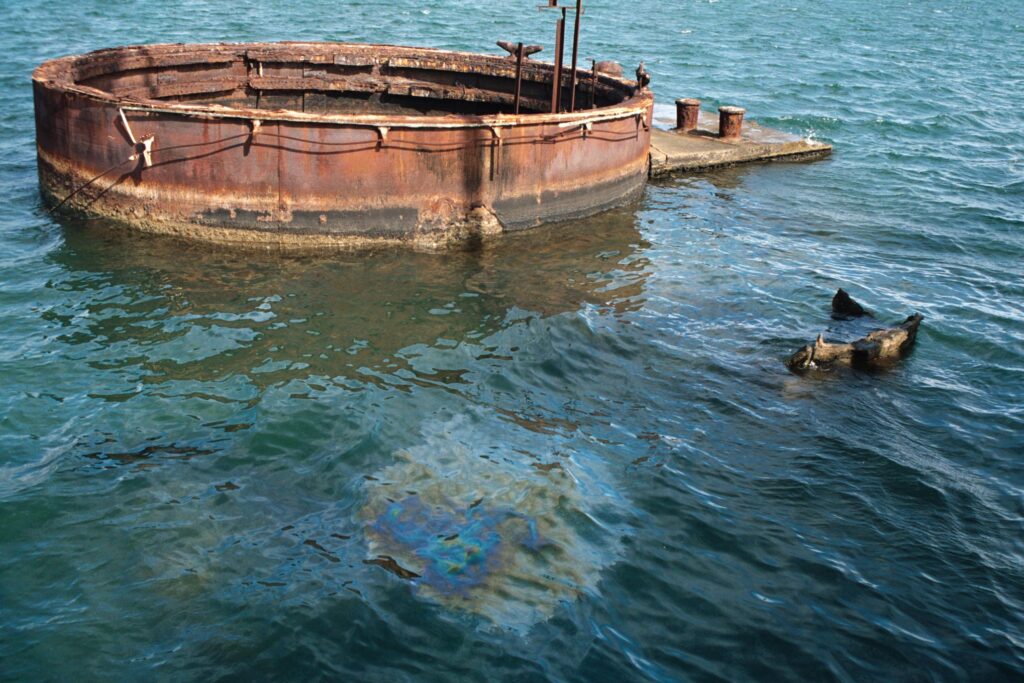
However, beneath the solemn history and the quiet reflection of the memorial, something else continues to happen: oil rises to the surface. Visitors sometimes notice small rainbow-like patches floating in the water. These slicks come from fuel still trapped inside the wreck. The oil appears in droplets and thin streams, and it is often described as “black tears” because it looks like the ship is still bleeding. This haunting image has turned the leak into more than just an environmental issue—it has become a symbol of lingering grief and unfinished history.
The ship originally carried around 1.5 million gallons of oil, an enormous quantity needed to power such a massive battleship. When the ship sank, not all of that fuel escaped immediately. Some burned during the explosion and fire, some leaked out quickly, but a significant portion remained trapped inside sealed compartments. Over time, corrosion and deterioration have slowly weakened the ship’s structure, allowing oil to seep out little by little. Because the leak is gradual, it has continued for decades. The fact that oil can still escape after so many years demonstrates how much remained inside the wreck and how slowly the environment breaks down such a large structure.
Scientists and historians have monitored the oil leak for years. It raises serious questions about preservation, environmental safety, and long-term planning. On one hand, the USS Arizona is considered a war grave, meaning disturbing the wreck is treated with great sensitivity. Many people believe it should remain untouched out of respect for those who died there. On the other hand, the oil inside the ship could eventually cause harm if a major structural collapse leads to a sudden release. While the current leak is relatively small, the potential for a larger spill remains a concern. This creates a difficult balance between honoring the memorial and protecting the harbor’s ecosystem.
The idea that the ship could leak for 500 years comes from estimates comparing the amount of oil remaining with the rate at which it escapes. If the leak continues at a similar pace, it could indeed last centuries. This timeline is staggering, especially when you consider that the attack happened in 1941. It means that long after everyone alive today is gone, the USS Arizona could still be releasing traces of its fuel into the water. That makes the wreck not only a historic site but also a long-term environmental responsibility. It is a rare case where the past is literally seeping into the present.
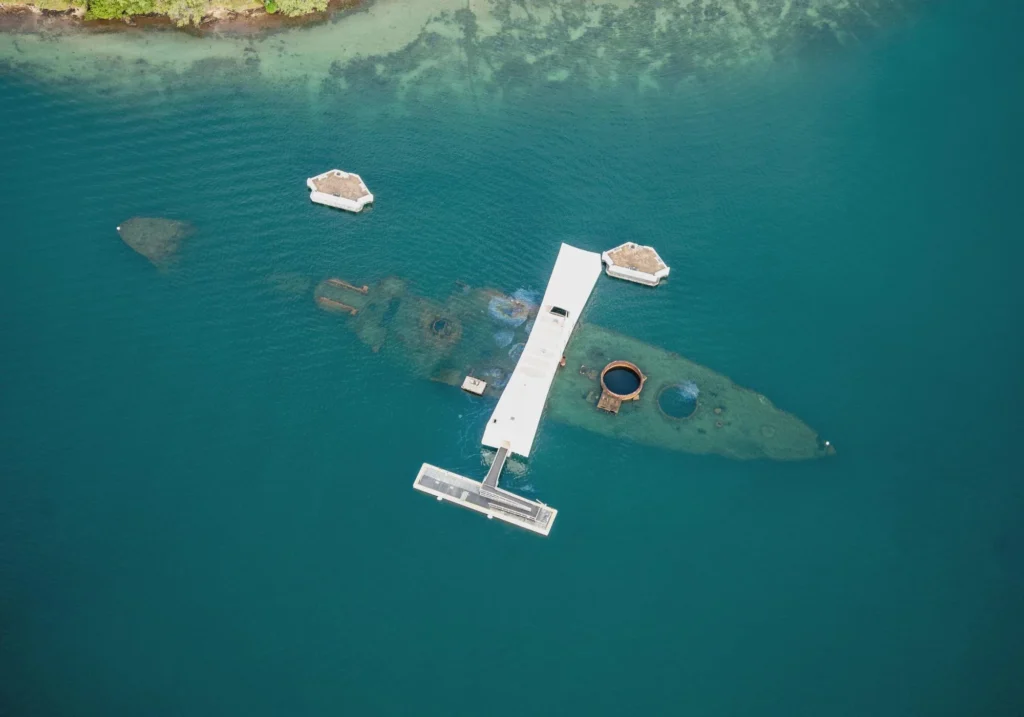
Despite this, the oil leak also serves as a powerful reminder of the ship’s story. For many visitors, seeing the oil on the water adds emotional weight to their experience. It makes the tragedy feel real, physical, and immediate. Unlike a statue or a plaque, the oil is something that continues to happen—it is not frozen in time. It shows that the ship is still there, still changing, still connected to the world above it. The harbor itself becomes part of the memorial, holding the wreck in place while also revealing pieces of it through the oil.
The USS Arizona is often described as one of the most important memorials in the United States. People travel from all over the world to visit the site and pay their respects. The oil leak adds another layer of meaning. It reminds us that war leaves behind more than stories and monuments—it leaves behind physical consequences that can last for generations. The ship’s fuel, once meant to power a machine of war, now quietly stains the water as a reminder of destruction.
As time goes on, the condition of the wreck will continue to change. Rust, saltwater corrosion, and natural decay will weaken the structure further. Experts will likely continue monitoring the ship to prevent a sudden environmental disaster while maintaining the dignity of the site. The story of the USS Arizona is not only about what happened in 1941—it is also about what continues to happen today. The ship remains a resting place for lost sailors, a symbol of sacrifice, and a warning that the effects of tragedy can last far beyond the moment it occurs.
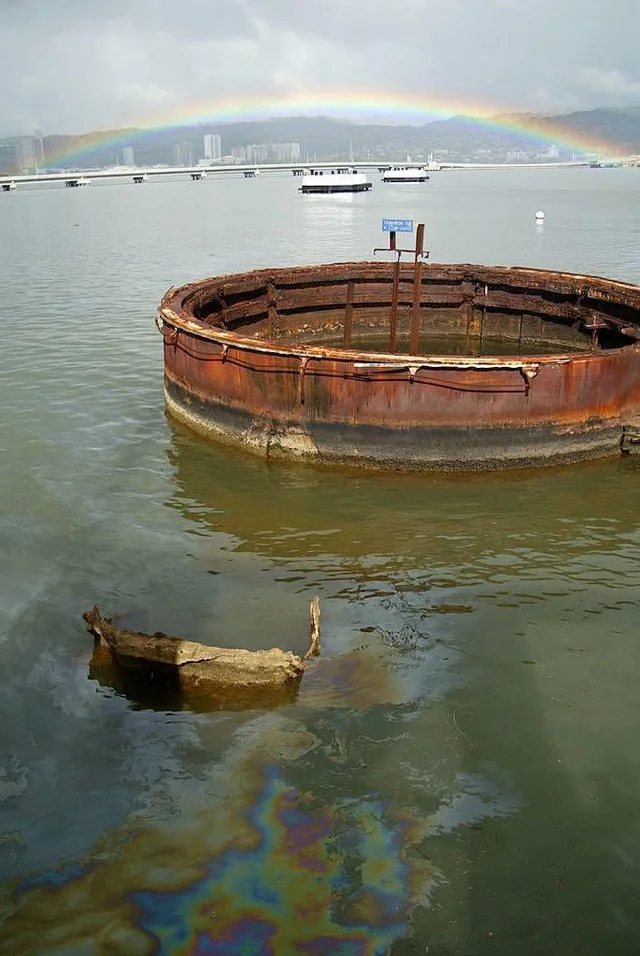
In the end, the USS Arizona is more than a wreck beneath the water. It is a living piece of history, still shaping the world around it. Its oil continues to rise like a quiet echo from the past, reminding us that some wounds never fully heal. The ship may be silent, but it still speaks—through memory, through loss, and through the dark drops of fuel that still surface after so many years.