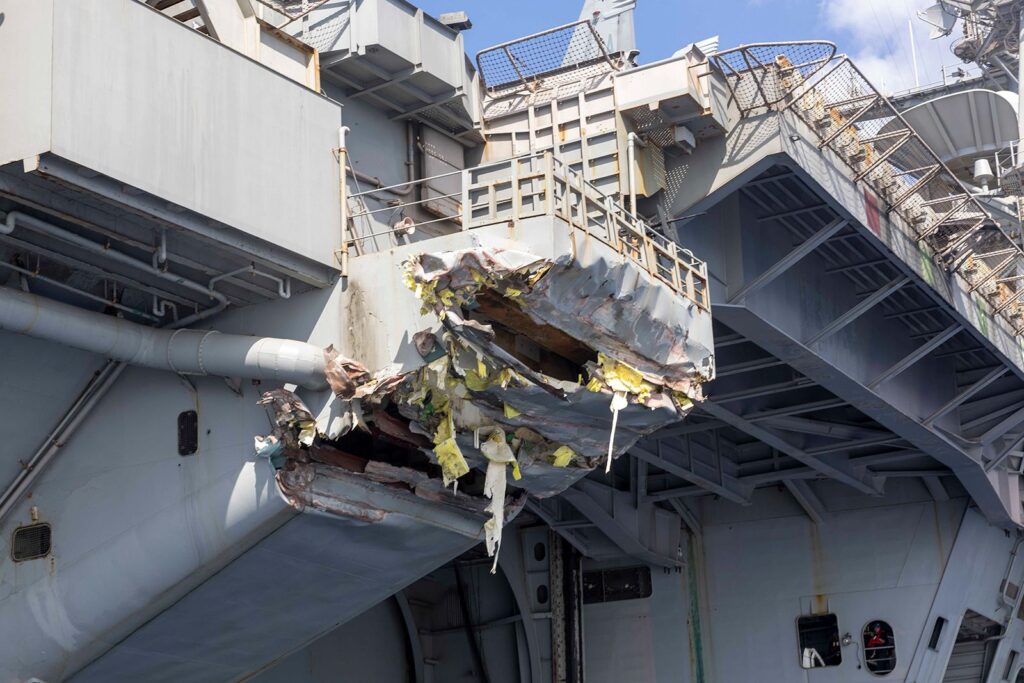
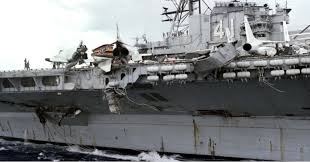
In July 1980, the aircraft carrier USS Midway (CV-41) experienced one of the most serious and unexpected incidents of its operational life when it collided with the Panamanian freighter MV Cactus while operating at sea. Although aircraft carriers are designed to withstand the harsh conditions of naval warfare and the dangers of long deployments, collisions at sea remain among the most unpredictable and dangerous accidents a ship can face. The event was sudden, alarming, and served as a powerful reminder that even the largest and most advanced naval vessels are not immune to human error, miscommunication, and the unforgiving nature of maritime navigation.
The USS Midway was not just any warship—it was one of the most iconic aircraft carriers in United States Navy history. Commissioned after World War II, the carrier became a symbol of American naval strength during the Cold War era, operating as a floating air base capable of launching and recovering high-performance aircraft across the globe. By 1980, the Midway had already spent decades in service and had been modernized multiple times to remain effective in a rapidly evolving military environment. It carried thousands of sailors and aviators, along with a powerful air wing, advanced radar systems, and a command structure built to handle combat operations. Yet, despite all of this sophistication, the ship’s safety still depended on something very basic: the ability to safely share the ocean with other vessels.
At sea, large ships operate under strict navigation rules designed to prevent accidents. However, real-world conditions can complicate even the best procedures. Visibility can change quickly due to weather or darkness, radio communications may be unclear, and ships often travel at different speeds and headings. A massive aircraft carrier like the Midway requires significant distance and time to adjust course or slow down. Unlike smaller vessels, it cannot maneuver quickly in an emergency. This makes coordination and awareness especially critical when operating near commercial shipping traffic.
The freighter MV Cactus, sailing under Panamanian registry, represented the other side of maritime life: commercial transport. Freighters like the Cactus are built for cargo capacity and long voyages between ports, often carrying goods that support international trade. While they may not possess the advanced navigation and military systems of a U.S. Navy carrier, they follow international maritime rules and rely heavily on watchkeeping, radar observation, and communication to avoid dangerous situations. In most circumstances, military and civilian vessels can pass safely with proper spacing and attention. However, when mistakes happen, the results can be catastrophic.
The collision between the USS Midway and the MV Cactus was described as serious and unexpected, meaning it likely occurred quickly and without enough warning for either vessel to avoid impact. Such accidents often result from a combination of contributing factors rather than a single cause. Possible elements include misunderstandings about right-of-way, failure to maintain a proper lookout, confusion over the intentions of the other ship, or delayed response to a developing hazard. In busy sea lanes, where multiple vessels may be traveling in close proximity, a small misjudgment can rapidly turn into a crisis.
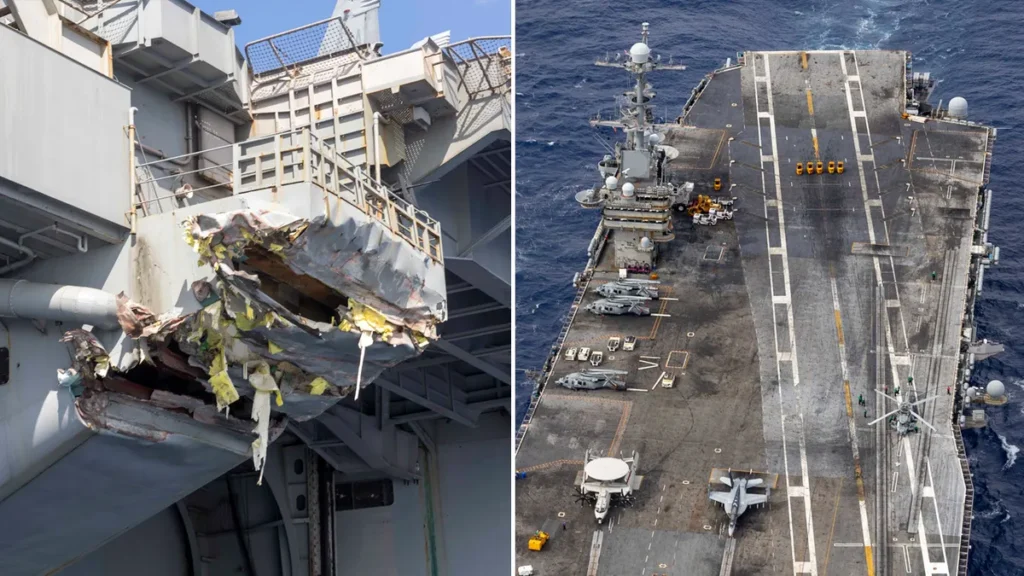
When a collision occurs at sea—especially involving a ship the size of an aircraft carrier—the force involved is enormous. The Midway displaced tens of thousands of tons, and even at moderate speed, its momentum would be difficult to stop. A freighter, while large, could still suffer devastating damage if struck by a vessel of that scale. The impact could tear open hull plating, damage vital compartments, and create immediate risks such as flooding, fire, or structural failure. For the crew aboard both ships, the moments following the collision would have been chaotic and tense.
On the Midway, the collision would have triggered emergency procedures almost instantly. Sailors would have rushed to damage control stations, while officers assessed the situation from the bridge and combat information center. Damage control is one of the most important skills in the Navy, and aircraft carriers train constantly for emergencies like flooding, fire, and hull breaches. Teams would have checked for leaks, sealed compartments, and ensured that essential systems—such as propulsion, electrical power, and steering—remained functional. Medical personnel would have prepared to treat injuries, while communications officers coordinated reports and assistance if needed.
Meanwhile, aboard the MV Cactus, the situation may have been even more dangerous. Commercial freighters typically have smaller crews compared to naval vessels, meaning fewer hands are available during emergencies. Depending on where the ship was struck, it could have suffered flooding in cargo holds or engine spaces, potentially threatening its ability to remain afloat. If fuel tanks were damaged, there may have been environmental risks as well. The crew would have needed to evaluate whether the ship could continue sailing or required immediate help.
In the aftermath of the collision, one of the most urgent priorities would have been ensuring that both ships remained stable and did not sink. Naval vessels are designed with extensive compartmentalization, allowing them to survive damage by isolating flooding to specific sections. However, even a strong ship can become vulnerable if the damage is severe enough or if water spreads faster than it can be contained. For the Midway, the concern would have been maintaining flight deck safety, structural integrity, and the operational readiness of its air wing. Any major disruption could force the carrier to halt flight operations and potentially return to port for repairs.
A collision of this magnitude would also have led to investigations and official reviews. The U.S. Navy treats such incidents very seriously, not only because of the risk to life and equipment but also because a carrier represents a major strategic asset. Investigators would have examined radar logs, navigation charts, watchstanding procedures, communication transcripts, and crew testimonies to determine how the accident occurred. The goal would have been to identify mistakes, prevent similar events in the future, and ensure accountability where necessary.
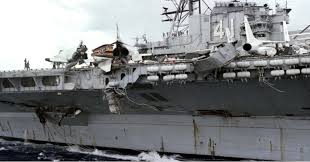
Beyond the immediate physical damage, the collision would have carried a psychological impact. Sailors serving aboard an aircraft carrier expect danger from combat or mechanical emergencies, but collisions with civilian ships can feel especially shocking because they seem preventable. The sense of surprise and vulnerability can linger, reminding crews that routine operations can become dangerous in seconds. For both the Navy and commercial maritime communities, such an event reinforces the importance of strict navigation discipline, clear communication, and constant situational awareness.
Ultimately, the July 1980 collision between the USS Midway and the MV Cactus stands as a dramatic example of how even powerful ships can face sudden crisis in open waters. It highlights the complexity of naval operations, the risks of shared sea lanes, and the vital role of professionalism and preparedness at sea. While the ocean often appears calm and predictable, incidents like this prove that it can turn unforgiving without warning. The story of the Midway and the Cactus remains a reminder that maritime safety depends not only on technology and ship size, but also on human judgment, teamwork, and constant vigilance.