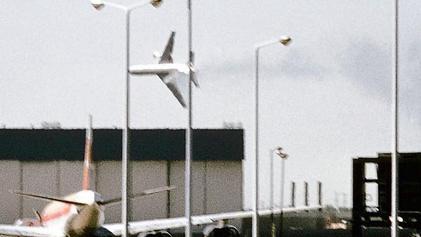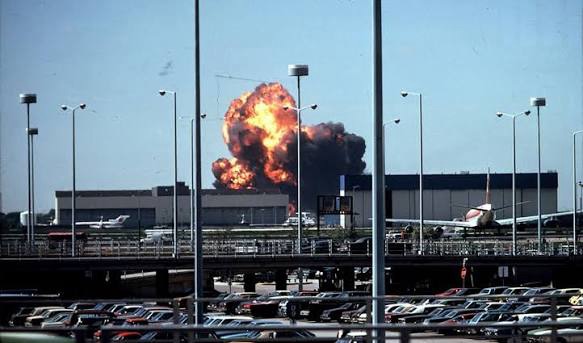
On May 25, 1979, American Airlines Flight 191 became the site of one of the darkest moments in aviation history. What began as a routine domestic flight from Chicago O’Hare International Airport to Los Angeles ended in catastrophic failure only seconds after takeoff. The McDonnell Douglas DC-10 crashed into a nearby field moments after lifting off, killing all 271 passengers and crew on board, along with two people on the ground. To this day, Flight 191 remains the deadliest aviation accident in United States history.
The aircraft involved was a McDonnell Douglas DC-10-10, a wide-body tri-jet that had entered service earlier in the decade. At the time, the DC-10 was a symbol of modern air travel—capable of carrying hundreds of passengers across long distances efficiently. However, its reputation would be permanently scarred by the tragedy at O’Hare.
A Routine Departure Turns Deadly
Flight 191 departed from Runway 32R at O’Hare on a clear spring afternoon. Weather conditions were favorable, visibility was good, and nothing appeared out of the ordinary as the aircraft accelerated down the runway. On board were 258 passengers and 13 crew members, many heading west for business, vacation, or family visits.
As the aircraft rotated and lifted off the runway, disaster struck. The left engine, mounted beneath the wing, suddenly separated from the aircraft. The engine tore away violently, flipping up and over the wing before falling to the ground below. This engine separation caused severe damage to the aircraft’s wing structure and critical systems, setting off a chain of failures that the flight crew had no chance to overcome.
Loss of Control in Seconds
The separation of the engine did more than reduce thrust. As it tore away, it severed hydraulic lines and damaged electrical systems essential to flight control. Most critically, it disabled the leading-edge slats on the left wing. These slats are designed to extend during takeoff to increase lift at low speeds. With the slats retracted on one wing and extended on the other, the aircraft became aerodynamically unstable.
From the cockpit, the pilots were unaware of the full extent of the damage. Warning systems at the time did not clearly indicate the asymmetrical slat failure. The crew followed standard procedures for an engine failure during takeoff, reducing speed and adjusting pitch. Tragically, these correct actions unknowingly placed the aircraft into an unrecoverable aerodynamic condition.
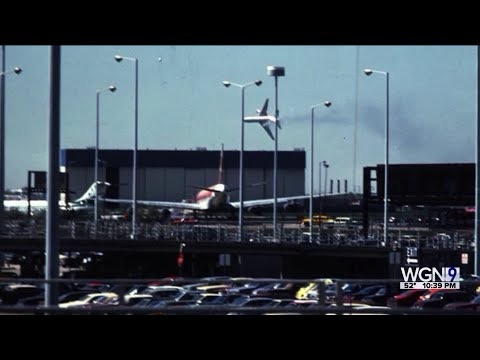
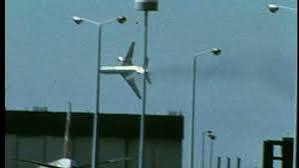
Within seconds, the DC-10 rolled sharply to the left, reaching a bank angle of more than 100 degrees. The aircraft stalled, lost lift, and plunged nose-down into an open field near the airport. The impact and ensuing fire destroyed the aircraft instantly.
The Aftermath and Investigation
Emergency responders arrived quickly, but there were no survivors. The scale of the tragedy shocked the nation and the world. Images of the wreckage spread rapidly through news outlets, raising urgent questions about aircraft safety, maintenance practices, and the design of the DC-10 itself.
The National Transportation Safety Board (NTSB) launched an extensive investigation. While early speculation focused on possible design flaws in the DC-10, investigators soon identified a more specific and preventable cause: improper maintenance procedures.
Improper Maintenance: The Root Cause
The investigation revealed that American Airlines maintenance crews had been using an unauthorized procedure to remove and reinstall DC-10 engines. Instead of removing the engine and pylon separately, mechanics removed them together using a forklift. While this method saved time and reduced labor costs, it placed extreme stress on the pylon mounting structure.
Over time, this stress caused microscopic cracks in the pylon. On Flight 191, those cracks finally failed during takeoff, allowing the engine and pylon to rip away from the wing. The maintenance practice, though used by other airlines as well, violated manufacturer guidelines and went undetected until it was too late.
Grounding the DC-10 Fleet
In the immediate aftermath of the crash, the Federal Aviation Administration (FAA) grounded all DC-10 aircraft worldwide. This unprecedented move reflected the seriousness of the accident and the urgency to restore public confidence in air travel.
Airlines, manufacturers, and regulators conducted comprehensive inspections of DC-10 pylons and maintenance records. The aircraft was eventually cleared to return to service after modifications, inspections, and revised maintenance procedures were implemented. Despite this, the DC-10 never fully recovered from the reputational damage caused by Flight 191.
Lasting Impact on Aviation Safety
The crash of American Airlines Flight 191 led to significant changes in aviation oversight and maintenance practices. Regulators strengthened enforcement of approved maintenance procedures, while airlines revised training programs for mechanics and inspectors. The accident underscored a critical lesson: even small deviations from approved procedures can have catastrophic consequences.
The tragedy also influenced aircraft design and warning systems. Modern aircraft now provide pilots with clearer indications of system failures and asymmetrical configurations, helping prevent similar scenarios from unfolding.
Remembering the Victims
Beyond the technical lessons, Flight 191 remains a deeply human tragedy. The 273 lives lost included families, children, crew members, and individuals whose journeys ended far too soon. Memorials and remembrance ceremonies continue to honor those who perished, ensuring they are never forgotten.
Each anniversary serves as a solemn reminder of the responsibility carried by airlines, manufacturers, and regulators to uphold the highest standards of safety. Aviation, one of the safest forms of transportation today, has been shaped by lessons learned through tragedies like Flight 191.
A Somber Legacy
American Airlines Flight 191 stands as a defining moment in aviation history. It demonstrated how cost-cutting, procedural shortcuts, and oversight failures can align with devastating results. While the industry has made enormous strides in safety since 1979, the memory of that day at O’Hare Airport continues to echo through training manuals, safety briefings, and regulatory policies worldwide.
Our thoughts remain with all those affected by this somber event. Their loss reshaped aviation forever, ensuring that future generations of passengers fly in a safer sky built upon the hard lessons learned from tragedy.