
The Delhi Zoo was the scene of a tragic and shocking incident when a 22-year-old man lost his life after falling into the enclosure of a white Bengal tiger. What began as an ordinary day for hundreds of visitors quickly turned into a moment of horror, raising urgent questions about safety measures, crowd control, and the psychological state that may have led the young man to venture so close to the restricted area.
According to witnesses, the man had been walking along the visitor pathway when he climbed over a low barrier meant to keep the public at a safe distance from the enclosure. The exact reason for his actions remains unclear—some suggested he may have slipped, while others believed he intentionally crossed the barrier out of curiosity. Regardless of the cause, he suddenly lost his balance and fell nearly twenty feet into the tiger’s den.
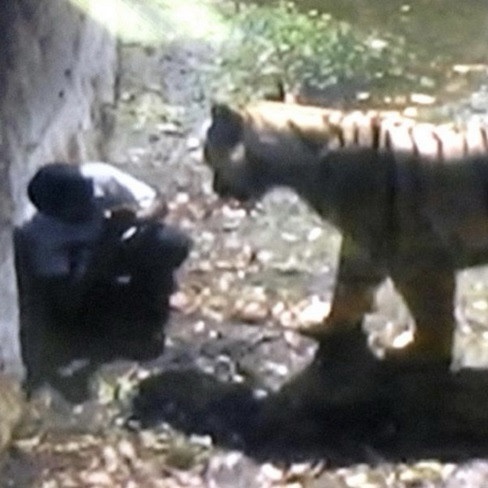
The white tiger, a massive and powerful male estimated to weigh over 200 kilograms, immediately became alert. Startled by the sudden intrusion, the tiger approached the young man, who found himself lying on the ground with no protection and no obvious escape route. Onlookers began shouting in panic, their screams echoing across the zoo as the horrifying scene unfolded.
Zoo authorities rushed to intervene, but their response was limited. Staff members attempted to distract the tiger by throwing objects and making loud noises, hoping the animal would retreat long enough to allow rescue personnel to enter the enclosure. However, tigers are territorial creatures, and the sudden commotion only heightened its agitation. In the chaos, the tiger attacked the man, leading to injuries that quickly turned fatal.
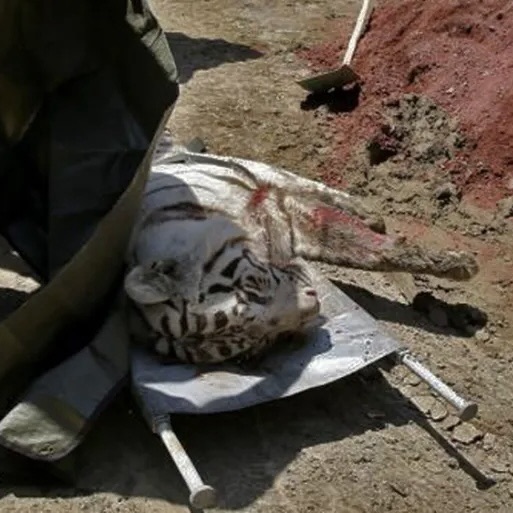
Emergency teams arrived within minutes, but it was already too late. The young man was declared dead, and his body was retrieved only after zoo officials managed to lure the tiger into a separate holding area. The incident left visitors shaken, with many leaving the premises visibly traumatized.
The tragedy sparked immediate public debate about the adequacy of safety measures at the Delhi Zoo. Many questioned whether the barriers were high enough to prevent accidental falls or intentional trespassing. Others pointed out the absence of trained emergency response teams equipped with tranquilizer guns ready for such emergencies. Zoo authorities defended themselves, arguing that the man had crossed multiple warning signs and climbed over the barrier, which was never meant to be breached.
Animal behavior experts offered a broader perspective. Tigers, especially those kept in captivity, develop strong territorial instincts. When an unfamiliar presence suddenly enters their domain, they react naturally—sometimes out of fear, sometimes out of dominance. In this case, the tiger appeared confused and defensive, responding as any wild predator would. Many conservationists urged the public not to blame the animal, emphasizing that it acted according to its instincts and should not face punishment for human error.
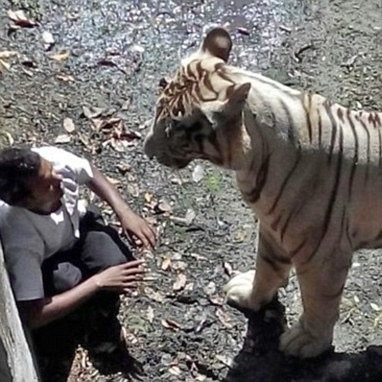
The white tiger became the center of media attention. While some members of the public demanded that it be relocated or euthanized, animal rights advocates strongly opposed any such action, reminding authorities that captive wildlife must not be penalized for incidents triggered by human negligence. In the end, the tiger remained at the zoo but under increased supervision and stricter enclosure management.
Investigators later examined CCTV footage to understand how the man ended up inside the enclosure. The video showed him standing near the edge of the barrier for several moments before he slipped and fell. His relatives later revealed that he had been experiencing emotional distress for some time, though whether this played any role in the incident could not be confirmed.
In response to the widespread criticism and public concern, zoo officials announced several measures to prevent similar tragedies. These included the installation of higher and more secure barriers, additional warning signs in multiple languages, and the deployment of more security officers along high-risk zones. The zoo also planned to introduce emergency training programs for staff, including rapid tranquilization protocols for large predators.
The incident also triggered a nationwide conversation about mental health and public awareness. Some experts highlighted the importance of educating visitors about the risks associated with approaching animal enclosures. The zoo is not merely a place of entertainment but a facility housing powerful and unpredictable wildlife. Human misjudgment, ignorance, or curiosity can lead to devastating consequences.
For days after the tragedy, crowds gathered outside the zoo gates to pay their respects to the young man. Social media platforms were filled with condolences, anger, and calls for better regulations. Television channels repeatedly broadcast images of the white tiger, often portraying it as a symbol of both beauty and danger. The tragic story touched millions, reminding the world of the fragile boundary between humans and wild animals—one that must be respected at all times.
As the shock slowly subsided, Delhi Zoo officials expressed their deepest condolences to the man’s family. They reaffirmed their commitment to public safety, vowing that such an incident would never be repeated. Meanwhile, animal lovers continued to advocate for compassion toward the tiger, emphasizing that it was a victim of circumstance, not a culprit.
This tragic event remains one of the most disturbing wildlife-related accidents in the country’s zoo history. It highlights an urgent need for better infrastructure, improved staff training, and greater public awareness. While the pain of the young man’s death will remain with his family forever, the lessons learned from this incident have the potential to save lives in the future.
Ultimately, the tragedy serves as a stark reminder of the respect and caution required when humans and wild animals share the same space. Zoos play a role in conservation, education, and public engagement, but these objectives must always be balanced with stringent safety protocols. The Delhi Zoo incident, heartbreaking as it is, underscores the vital importance of boundaries—physical, emotional, and instinctual—and the devastating consequences when those boundaries are crossed.