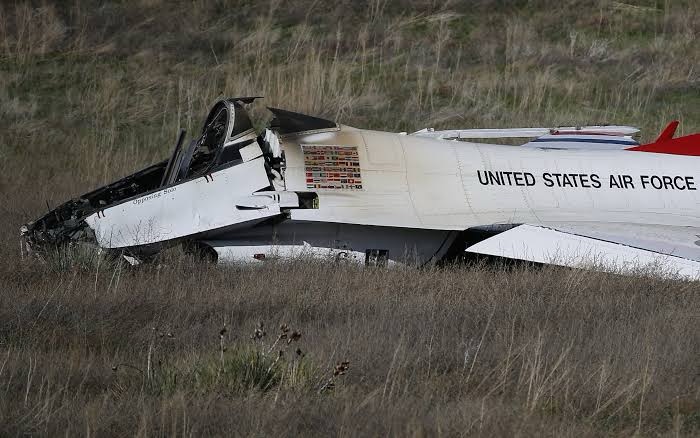
A U.S. Air Force F-16 Fighting Falcon assigned to the elite Thunderbirds demonstration team was destroyed following a dramatic crash that underscored the risks faced even by the most skilled military aviators. The incident sent shockwaves through the aviation community and renewed public attention on the intense demands placed on pilots who perform precision aerobatics at high speed and low altitude.
The Thunderbirds, officially known as the U.S. Air Force Air Demonstration Squadron, are among the most recognizable symbols of American airpower. Flying specially modified F-16C/D aircraft, the team performs tightly choreographed maneuvers that require absolute precision, flawless coordination, and split-second decision-making. Each routine places the aircraft within feet of one another while traveling at hundreds of miles per hour, leaving virtually no margin for error.
According to initial reports, the aircraft went down during operations when something went catastrophically wrong. Witnesses described seeing the F-16 lose control before impacting the ground in a violent crash. Emergency crews responded immediately, but the aircraft was completely destroyed upon impact. Fire and debris marked the crash site, a stark reminder of the destructive forces involved when high-performance jets meet the ground at speed.
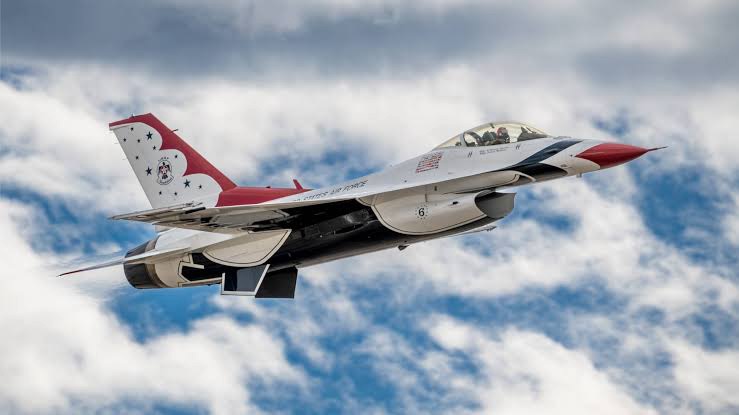
The pilot, trained extensively for both combat and demonstration flying, managed to eject before the aircraft was destroyed. Thanks to modern ejection seat technology and rapid response from rescue personnel, the pilot survived the incident. Air Force officials later confirmed that the aviator was transported for medical evaluation and was expected to recover, a fortunate outcome in what could easily have been a fatal accident.
While the exact cause of the crash remains under investigation, Air Force safety teams are examining multiple possibilities. These include mechanical failure, bird strike, environmental conditions, and potential issues related to flight control systems. The F-16, though highly reliable and battle-proven, is an aging platform, and demonstration aircraft experience unique stresses due to their extreme flight profiles.
Whenever a Thunderbirds aircraft is involved in a crash, the team’s schedule is immediately paused. Performances are typically suspended until investigators determine the cause and ensure the safety of remaining aircraft and personnel. This cautious approach reflects the Air Force’s commitment to safety and its recognition that public trust depends on transparency and accountability.
Historically, the Thunderbirds have maintained an exceptional safety record given the complexity of their missions. However, accidents have occurred over the decades, each one prompting changes in procedures, training, or aircraft maintenance. These incidents, while tragic, often lead to improvements that enhance safety across military aviation as a whole.
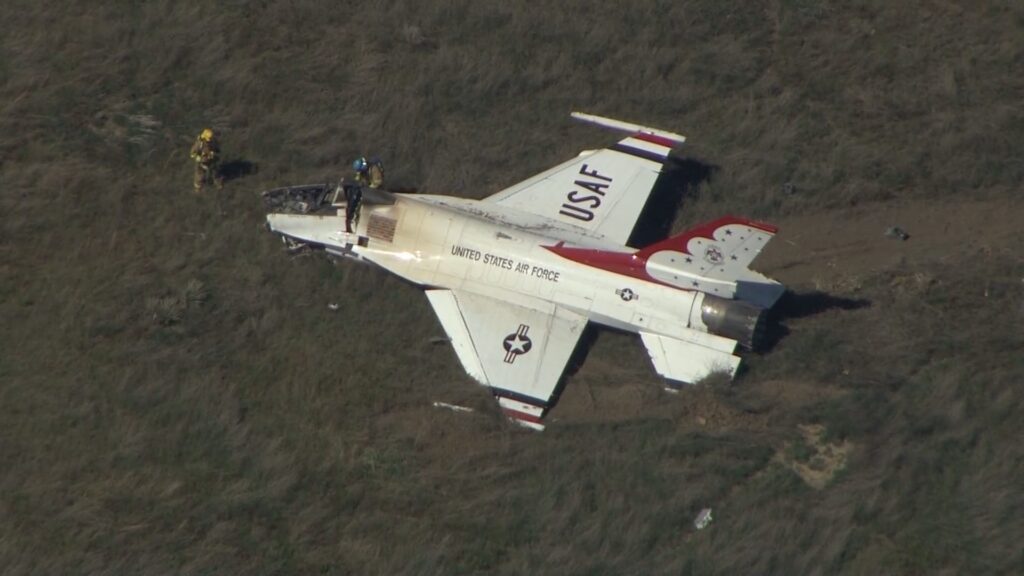
The destruction of the F-16 also represents a significant material loss. Each Thunderbirds jet is customized with unique avionics, reinforced structures, and the team’s iconic red, white, and blue livery. Replacing such an aircraft is neither quick nor inexpensive, adding another layer of impact to the incident beyond the immediate danger to human life.
For spectators, the crash serves as a sobering contrast to the spectacle normally associated with air shows. The graceful loops, precise formations, and thunderous passes hide the reality that these pilots operate at the very edge of aerodynamic limits. One small malfunction or unexpected variable can turn a flawless performance into an emergency within seconds.
As the investigation continues, the Air Force has emphasized its focus on learning from the crash and preventing future incidents. The Thunderbirds remain a powerful symbol of skill, discipline, and national pride—but this event is a reminder that even the best-trained pilots face real risks every time they take to the sky.