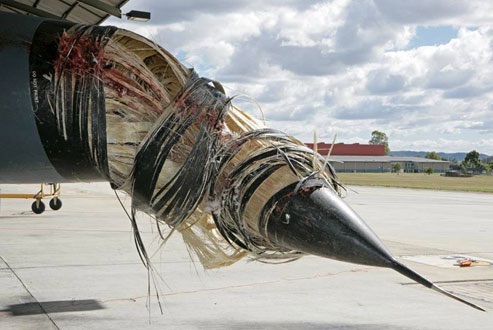
The F-111 Aardvark, one of the most distinctive and rugged aircraft ever built, once again proved its legendary durability after safely landing despite striking a pelican at extremely high speed. Bird strikes are a known hazard in aviation, but when they occur at the velocities flown by military jet aircraft, the consequences can be severe or even catastrophic. In this case, however, the F-111 demonstrated why it earned a reputation as a tough and resilient strike aircraft.
The incident occurred during a high-speed phase of flight when the aircraft unexpectedly collided with a pelican. Pelicans are large, heavy birds, and at jet speeds, even a relatively small bird can behave like a solid object upon impact. The force generated during such a collision is immense, capable of shattering canopies, damaging engines, or crippling flight control systems. Despite this, the F-111 remained controllable, and the crew was able to bring the aircraft back safely.
The F-111 Aardvark was designed during the Cold War as a long-range, supersonic strike aircraft capable of penetrating heavily defended airspace. To fulfill this mission, it was engineered with exceptional structural strength. Its robust airframe, reinforced cockpit, and redundancy in critical systems allowed it to absorb damage that might have proven fatal to less rugged designs. This philosophy of survivability played a key role in the aircraft’s ability to withstand the violent bird strike.
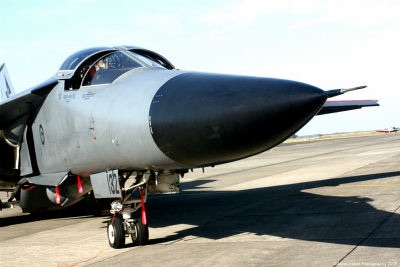
One of the F-111’s most notable features was its variable-sweep wings, which allowed the aircraft to adapt to different flight regimes. While this feature is often discussed in terms of performance, it also reflected the aircraft’s overall design emphasis on stability and control at high speeds. When the pelican strike occurred, maintaining control was crucial, and the aircraft’s aerodynamic stability gave the crew precious seconds to assess the situation.
Bird strikes are particularly dangerous for military aircraft because they often fly at lower altitudes and higher speeds than commercial airliners. At these speeds, even reinforced canopies and intakes are vulnerable. In this incident, the impact caused damage but did not compromise the aircraft’s ability to fly. The crew followed emergency procedures, monitored engine performance and structural integrity, and elected to return to base rather than continue the mission.
The successful landing highlighted not only the strength of the aircraft but also the professionalism and training of its crew. Military pilots are trained extensively to handle unexpected emergencies, including bird strikes, engine failures, and structural damage. Calm decision-making and adherence to established procedures ensured that a dangerous situation did not escalate into a disaster.
Incidents like this also serve as valuable learning opportunities for aviation safety. Post-flight inspections allow engineers to study the damage in detail, improving understanding of how aircraft structures respond to extreme impacts. This information is used to refine design standards, update maintenance practices, and enhance pilot training across military aviation.
The F-111 Aardvark served for decades with the United States Air Force and allied air forces, building a reputation for reliability and toughness in some of the most demanding operational environments. From low-level penetration missions to high-speed strike roles, it consistently demonstrated its ability to bring crews home even when things went wrong.
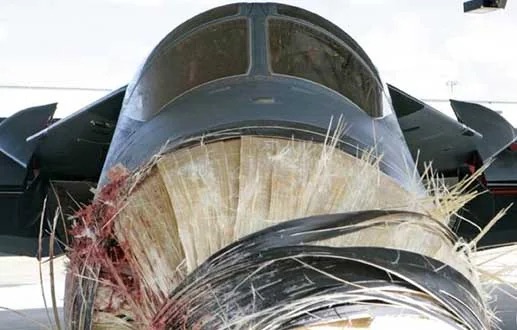
The pelican strike incident stands as yet another example of the aircraft’s remarkable survivability. While bird strikes remain an unavoidable risk in aviation, this event underscores the importance of strong engineering, rigorous training, and disciplined airmanship. In the end, the F-111 Aardvark did exactly what it was designed to do — endure damage, remain controllable, and land safely with its crew intact.