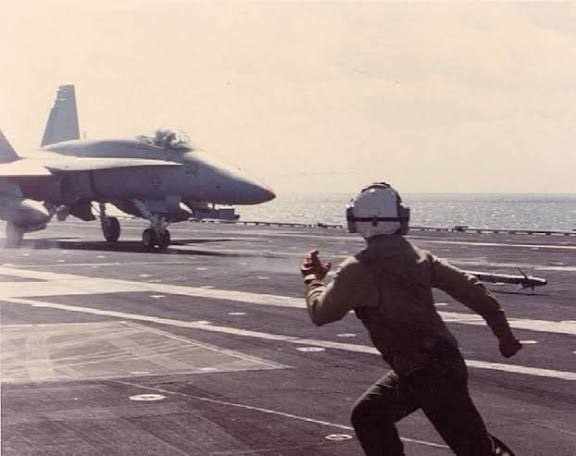
Aircraft carriers are among the most dangerous working environments in the world. With roaring jet engines, spinning rotors, moving aircraft, heavy machinery, and live weapons, the flight deck is a tightly controlled space where discipline, training, and precision are essential. Despite strict procedures and multiple layers of safety systems, accidents can still happen. One of the most alarming incidents in modern naval aviation is when an F/A-18 Hornet accidentally launched an AIM-9 Sidewinder missile during routine flight deck operations—an event that highlighted just how quickly a routine operation can turn into a life-threatening emergency.
The F/A-18 Hornet is a highly advanced multirole fighter used extensively by the United States Navy. Designed for both air-to-air combat and ground attack missions, it is capable of carrying a wide range of weapons, including precision-guided bombs, air-to-surface missiles, and air-to-air weapons like the AIM-9 Sidewinder. The Sidewinder itself is one of the world’s most famous infrared-guided missiles, known for its reliability, heat-seeking capability, and deadly accuracy. It is engineered for combat scenarios—not for accidental discharge in the confined, crowded environment of an aircraft carrier deck.
During flight deck operations, aircraft are constantly being moved, armed, fueled, and prepared for launch or recovery. Crews work in carefully coordinated teams, each with specific roles and responsibilities. Weapon systems are normally safeguarded by multiple mechanical and electronic interlocks designed to prevent accidental firing. However, in rare cases, a combination of human error, system malfunction, procedural breakdown, or miscommunication can override these safeguards.
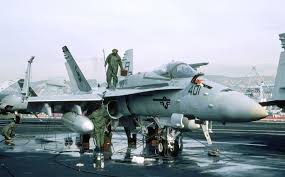
When the accidental launch occurred, it instantly transformed a controlled operational environment into a crisis situation. A live missile leaving the rail on a carrier deck poses catastrophic risks. Personnel, aircraft, fuel lines, weapons storage areas, and critical ship systems are all vulnerable. A single impact or explosion in such a dense operational zone could cause chain reactions, fires, secondary explosions, and mass casualties.
Fortunately, in incidents like these, emergency response procedures are immediately activated. Flight deck crews are trained for worst-case scenarios, including fires, explosions, and weapons accidents. Damage control teams, firefighting units, and medical personnel are always on standby during flight operations. Their rapid reaction, discipline, and coordination are often the difference between a contained incident and a full-scale disaster.
This type of event underscores the extreme complexity of modern naval aviation. Advanced aircraft like the F/A-18 Hornet integrate digital flight systems, weapons computers, sensor fusion, and automated targeting systems. While these technologies enhance combat effectiveness, they also introduce layers of technical complexity that must be managed flawlessly in high-pressure environments. Even small anomalies can escalate quickly when live weapons are involved.
Investigations following such incidents typically focus on multiple factors: mechanical systems, software behavior, human actions, and procedural compliance. These inquiries are not about assigning blame alone—they are about preventing future accidents. Naval aviation safety culture is built on learning from every mistake, near-miss, and failure. Updated procedures, revised training protocols, and system modifications often follow incidents to reduce the risk of recurrence.
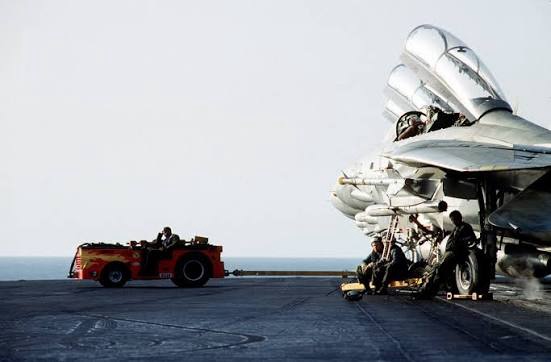
Beyond the technical aspects, this incident highlights the human element of military operations. Flight deck crews and pilots operate under intense pressure, often in extreme weather conditions, at night, and in high-tempo operational cycles. Fatigue, stress, and operational urgency can all affect performance, even among highly trained professionals.
The accidental launch of an AIM-9 Sidewinder from an F/A-18 Hornet serves as a stark reminder that military technology, no matter how advanced, is never completely immune to error. It also reflects the professionalism and resilience of naval personnel who train continuously to handle the unthinkable.
In the end, no matter how sophisticated the systems become, safety on the flight deck depends on discipline, procedure, training, and constant vigilance. Incidents like this are rare—but when they happen, they reinforce a crucial truth: on an aircraft carrier, there is no such thing as a “small” mistake. Every action matters, every procedure counts, and every safeguard exists for a reason.